
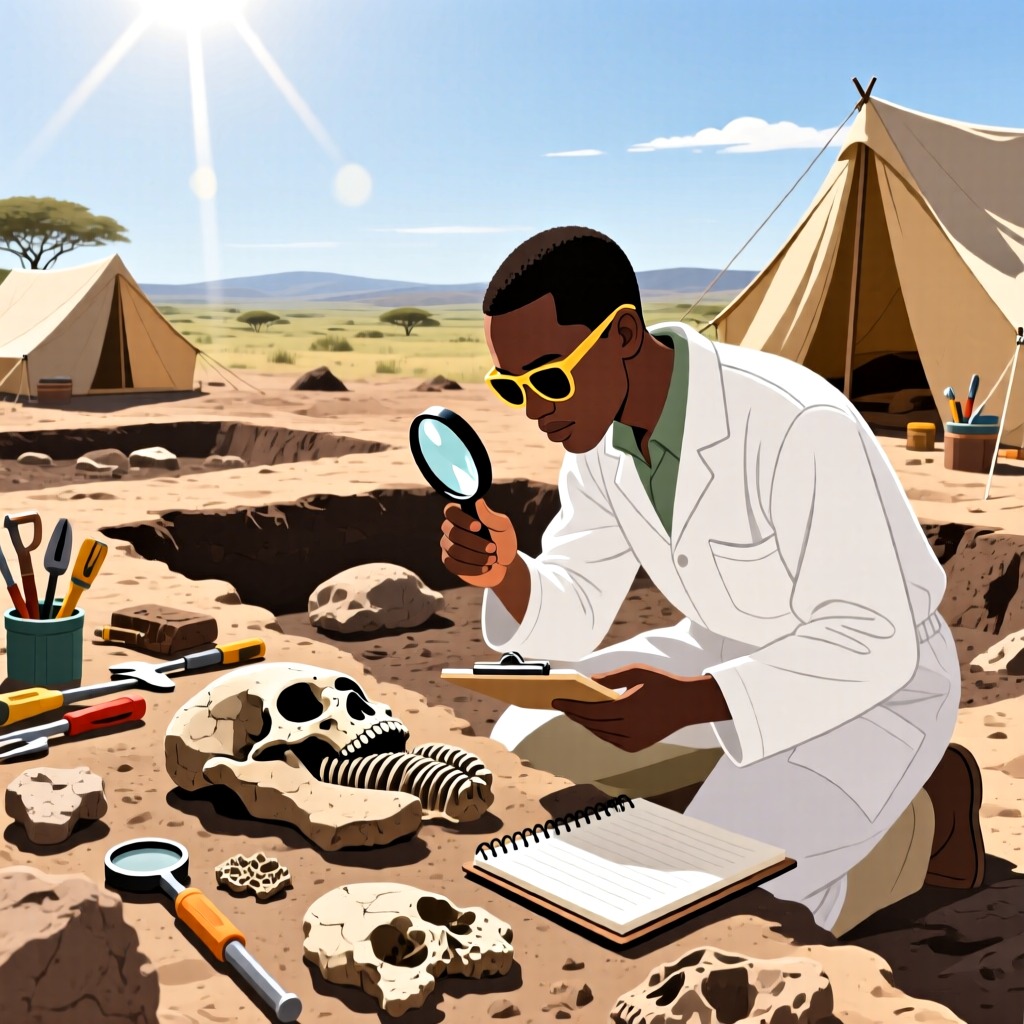

Where exactly did humanity originate? This question has long perplexed the scientific community. Since the discovery of numerous early human fossils in East Africa during the 1950s, Africa has been widely regarded as the cradle of humankind. As early as 1871, Darwin speculated that humans might have descended from ancient apes in Africa. The discovery of fossils of Australopithecus and Homo erectus in East Africa during the 1950s and 60s further supported this view. However, some scholars argue that humans may have originated in Asia, particularly in Central and South Asia. Fossils of ancient apes and early human artifacts from these regions, along with recent molecular biology research, provide new evidence for the Asian origin theory.
The question of human origins does not have a single answer. The discovery of the skull of Australopithecus boisei in the Olduvai Gorge, along with the first Homo habilis fossil found by Louis Leakey in 1960, are significant pieces of evidence. Additionally, ancient human remains have been found in China, Southern Europe, and the Americas, complicating the discussion surrounding human origins. Currently, the scientific community requires more archaeological data to unveil the mysteries of human origins.