
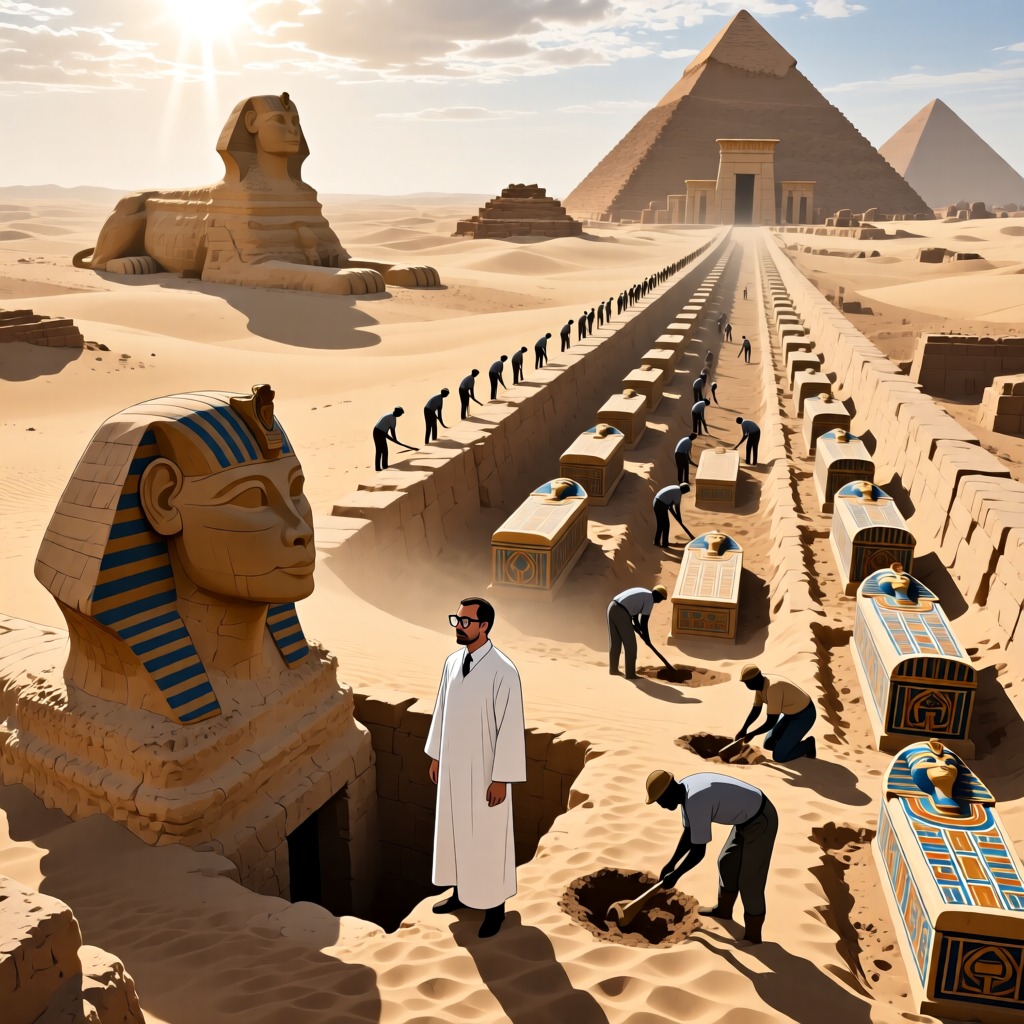

In 1850, French archaeologist Auguste Mariette made a remarkable discovery during his expedition in Egypt, noting the astonishing consistency of the Sphinx. By chance, he came across a buried Sphinx near the city of Chekala, which reminded him of the accounts of the ancient Greek traveler Strabo. Strabo mentioned that many statues were buried near the Temple of the Sacred Bull Serapis in Memphis. Convinced he had found a clue leading to the Sacred Bull Tomb, Mariette immediately began excavation work. The sunrise in November witnessed his discovery of the Temple of the Sacred Bull Serapis, where 30 workers, under his command, began digging, ultimately unveiling this mysterious underground tomb.
Mariette found that this site was not only the tomb of the Sacred Bull Serapis but also contained numerous bull tombs dating from the time of Ramses II to the Ptolemaic period. Each bull's body was meticulously wrapped and placed in massive sarcophagi made from solid blocks of black and red granite, weighing up to 72 tons. Mariette's discovery not only revealed details of ancient Egyptian religious rituals but also showcased the level of reverence society had for the Sacred Bull.