
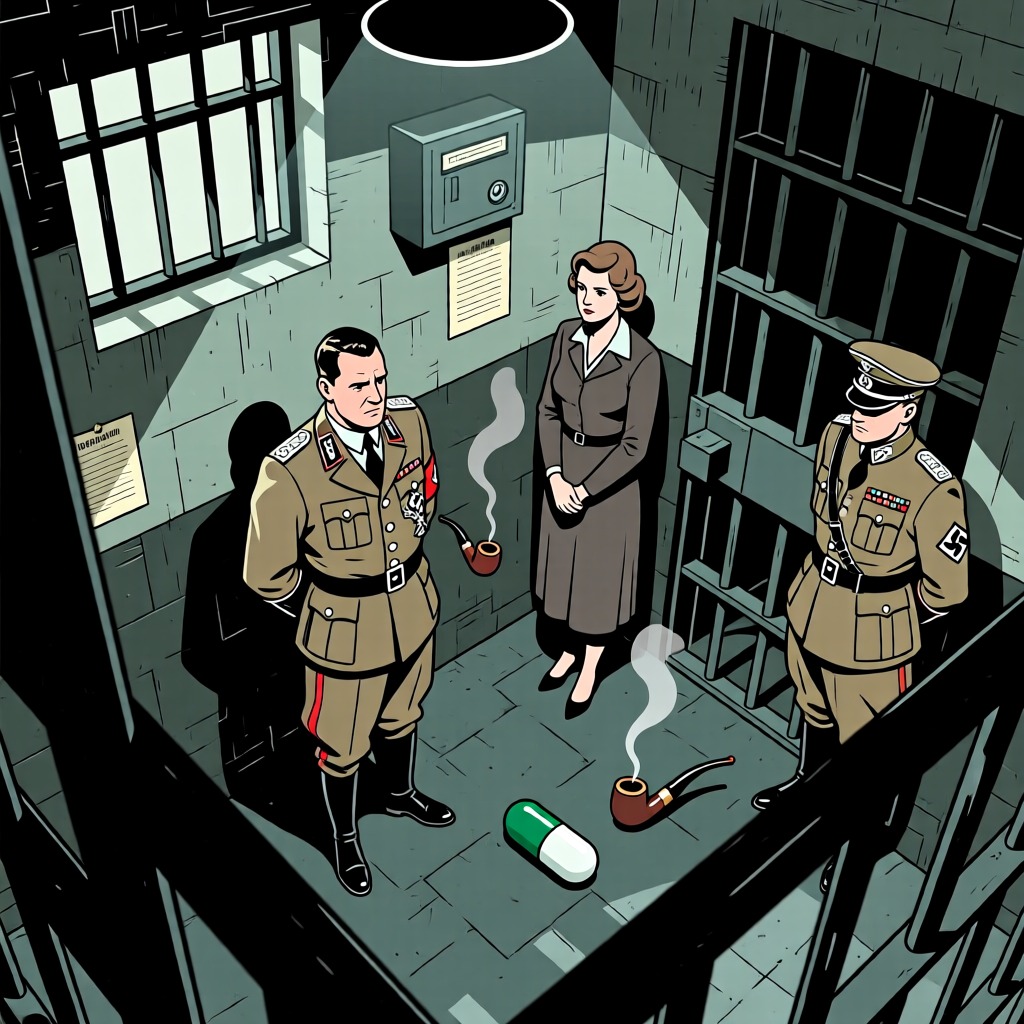

On November 20, 1945, Hermann Göring was tried by the Nuremberg International Military Tribunal. As the second-in-command of Nazi Germany, Göring played a significant role in both World Wars of the 20th century. However, on October 15, 1946, just before his scheduled execution, Göring committed suicide by ingesting poison, evading legal punishment. This event sparked numerous speculations and remains an unsolved mystery to this day.
The specific details surrounding Göring's suicide are still unclear. While some claim that he had concealed a cyanide capsule in his cell, evidence indicates that this capsule was indeed found among his belongings upon entering prison. Göring's new wife, Emmy Göring, provided dubious accounts after the incident, claiming that the capsule was given to him by a friend, yet this assertion lacks strong supporting evidence. Additionally, Göring's daughter and nephew were quite young at the time of the event, and their testimonies are equally unconvincing. Furthermore, the date on Göring's suicide note does not align with the actual timing of the event, adding to the complexity of the mystery.
In recent years, various explanations for Göring's suicide have emerged, some even bordering on the bizarre. For instance, some believe that the poison was hidden in a pipe or even in his navel. While these theories are imaginative, they lack concrete evidence. The Göring mystery remains unresolved, posing a challenging question for historians.
