
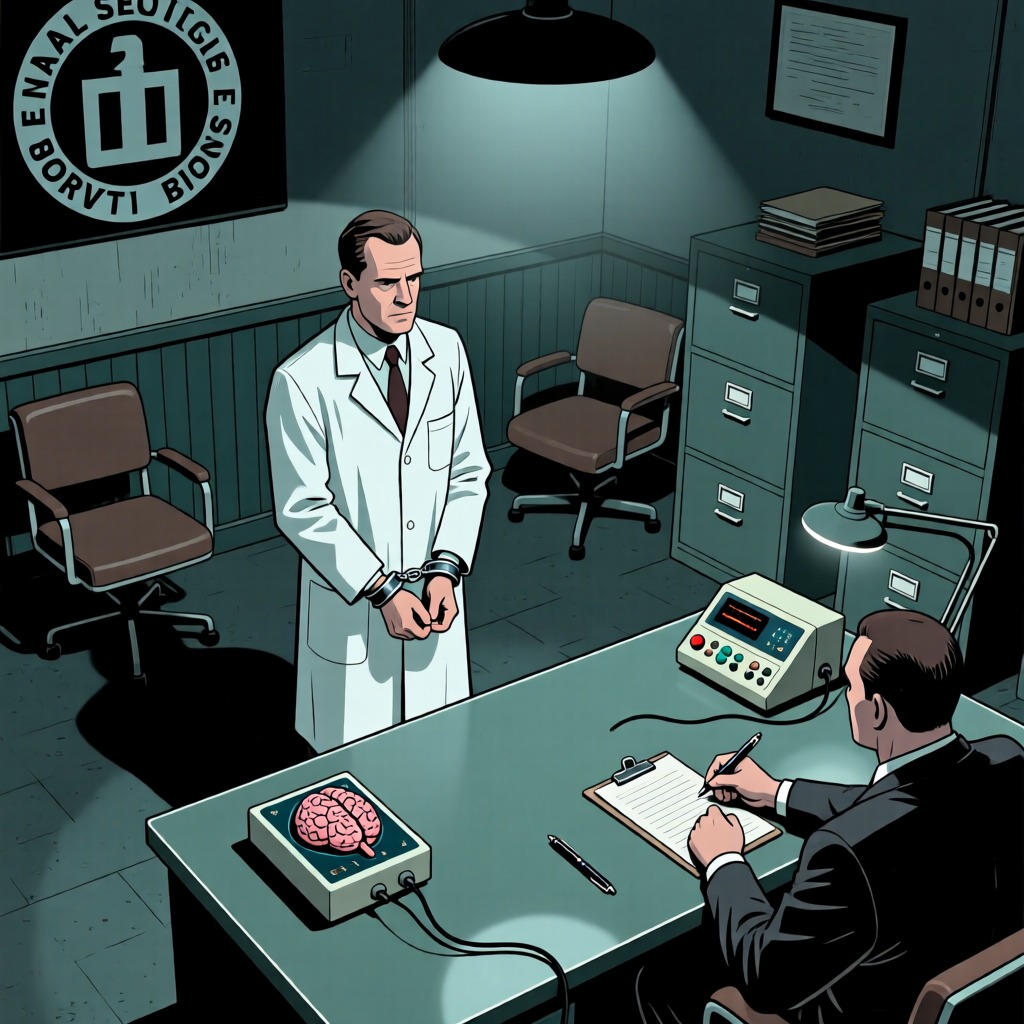

In the tumultuous world of espionage after World War II, physicist Klaus Fuchs emerged as a shining star, yet his legacy is shrouded in mystery. Who was he? Why did he become a focal point of global intrigue? How did he get entangled in this web of espionage? Fuchs's story is filled with enigmas, and his fate has become increasingly obscure.
Fuchs joined the German Communist Party at the University of Kiel in 1932, and during World War II, he earned his doctorate at the University of Bristol and the University of Edinburgh, which led to his detention by the British. In 1942, he became a British citizen and was sent to the United States to work on the development of the atomic bomb. After the war, he returned to the UK, taking up the position of head of the physics department at the Harwell Atomic Energy Research Establishment. However, in 1950, Fuchs was arrested by the United States for espionage and sentenced to 14 years in prison. He was released early in 1959 and moved to East Germany, eventually spending the rest of his life in the Soviet Union.
The circumstances of Fuchs's arrest were dramatic. The CIA spent countless sleepless nights employing various high-tech methods before finally zeroing in on Fuchs as their target. Despite having minimal evidence, Fuchs maintained his innocence throughout. It wasn't until 1990 that two prominent American magazines, Time and Newsweek, revealed that the charges against Fuchs were a miscarriage of justice, stating that the information he provided was actually ineffective "disinformation."
Scholars remain divided over Fuchs's identity. Some view him as a Soviet spy, while others believe he was wrongfully accused. This espionage saga not only affected US-Soviet relations but also sparked a crisis of trust in counterintelligence agencies. Fuchs's fate has become a legendary tale in the annals of espionage.