
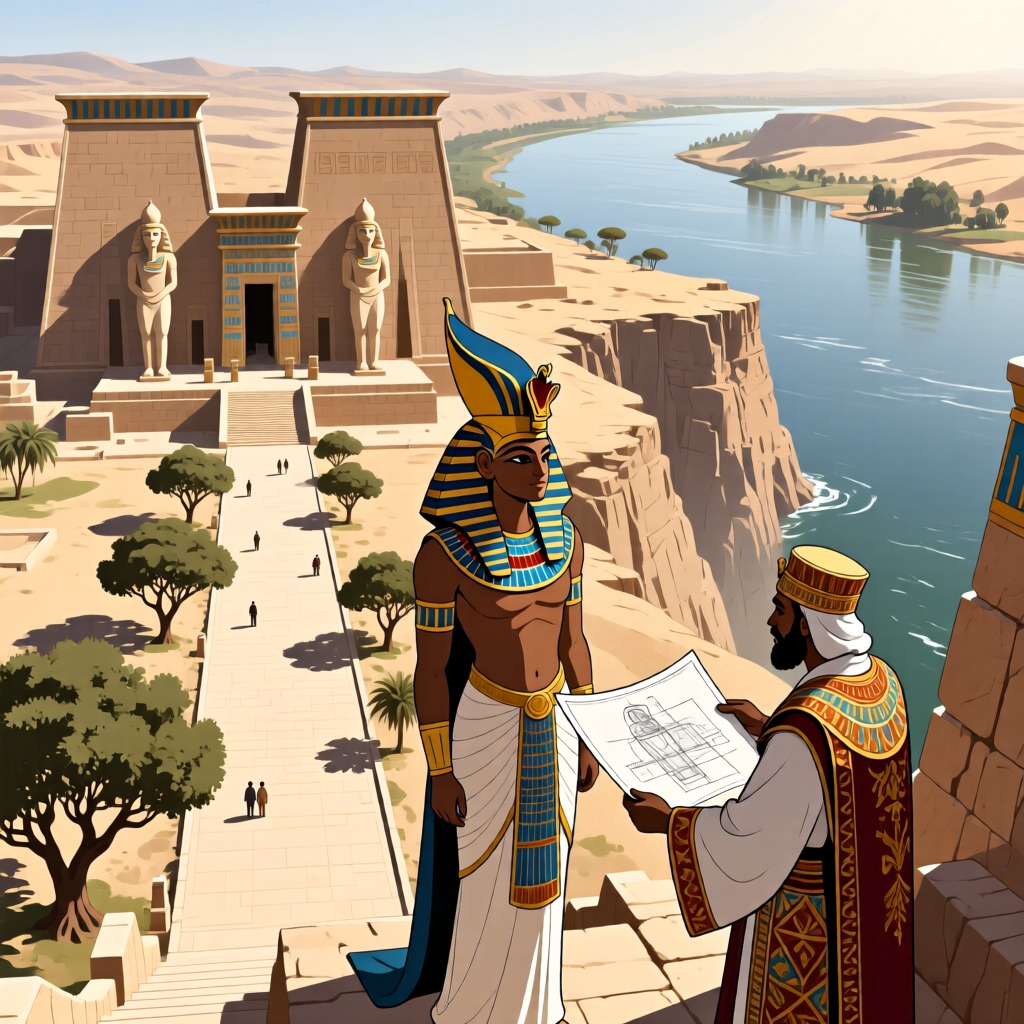

In ancient Egypt, around 1500 BC, Queen Hatshepsut broke traditions by not only claiming royal power but also declaring herself as 'king.' During her reign, she initiated extensive construction projects, building numerous grand temples and monuments, especially the Northern Temple. This temple, dedicated to the god of life, is perched on a cliff on the west bank of the Nile, featuring stunning gray-white colonnades. Hatshepsut's image in sculptures varies from slender to robust, yet she consistently exudes regal authority. She not only usurped her son's power but also nearly monopolized all male honorific titles, with one exception: 'Great Bull.' Through these constructions, Hatshepsut sought to promote her achievements and secure her legacy.
Although Hatshepsut's reign lacked significant military accomplishments, she enhanced her reputation through temple building. The chief architect, Senenmut, was responsible for designing and planning, ensuring that every desire of the queen was fulfilled. The porch of the Northern Temple is adorned with reliefs celebrating Hatshepsut, showcasing her lineage, political achievements, and merits. However, after Hatshepsut's death, Thutmose III quickly restored traditional order, erasing her name from monuments and destroying her statues. Ultimately, Hatshepsut was buried in the Valley of the Kings, a rare honor in ancient Egypt.