
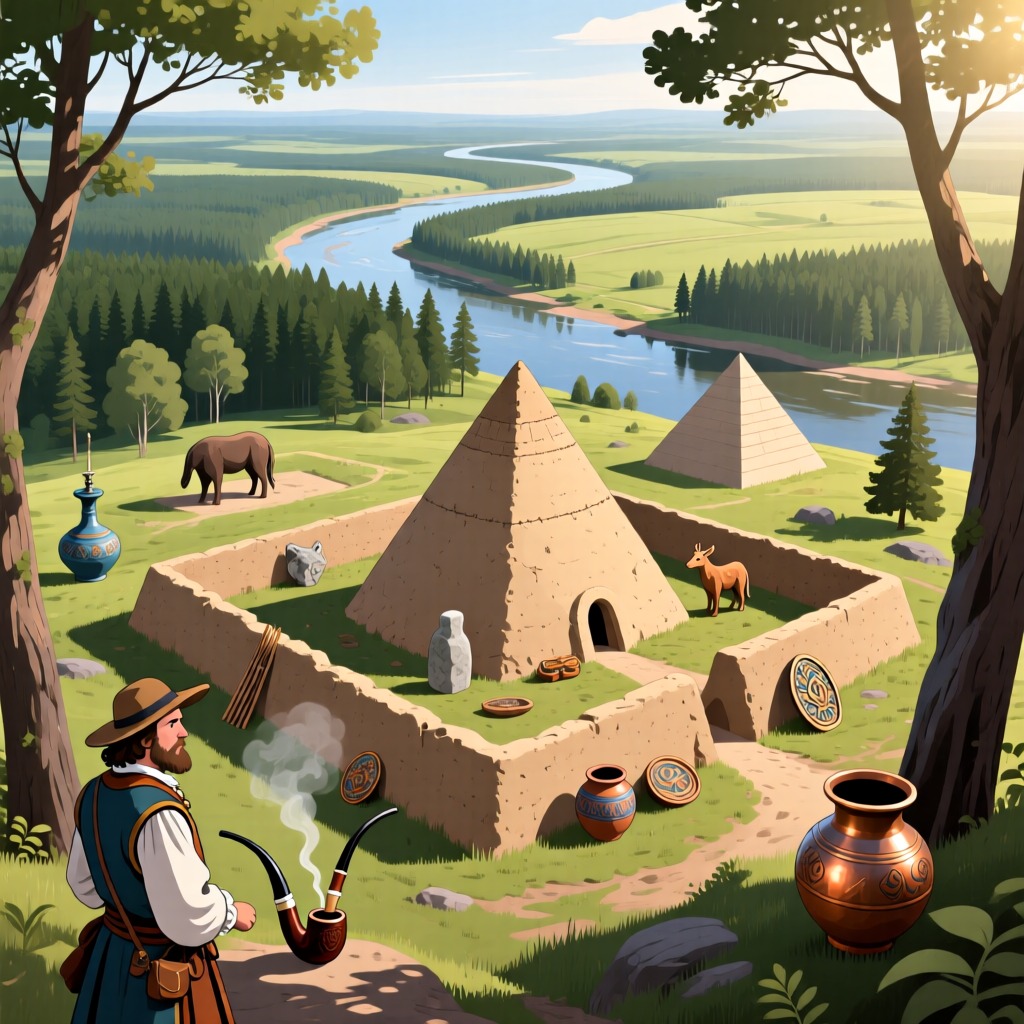

In the 16th century, European explorers set foot on North American soil, only to find little evidence of ancient civilizations. It wasn't until the 18th century that they discovered numerous peculiar mounds in the Ohio and Mississippi River valleys. These mounds varied in shape, some resembling cones, others animals, and some even flat-topped pyramids. Buried beneath these mounds were exquisite artifacts, leading Europeans to speculate that they were remnants of an ancient culture.
The existence of these mounds sparked widespread speculation, with some believing they were constructed by Asians, Vikings, or Israelites. However, in 1839, Morton's research debunked these theories, revealing that the skulls found in the mounds resembled those of modern Native Americans. In 1881, an archaeological team led by Thomas discovered European-made artifacts among the mound's treasures, proving that these mounds were not ancient relics but rather the work of Native Americans.
Ultimately, De Soto's records unveiled the truth: long before the arrival of Europeans, Native Americans had already begun constructing these mounds. These mounds belonged to three different Native American tribes, each built during different eras, reflecting their unique cultural characteristics and religious practices.
