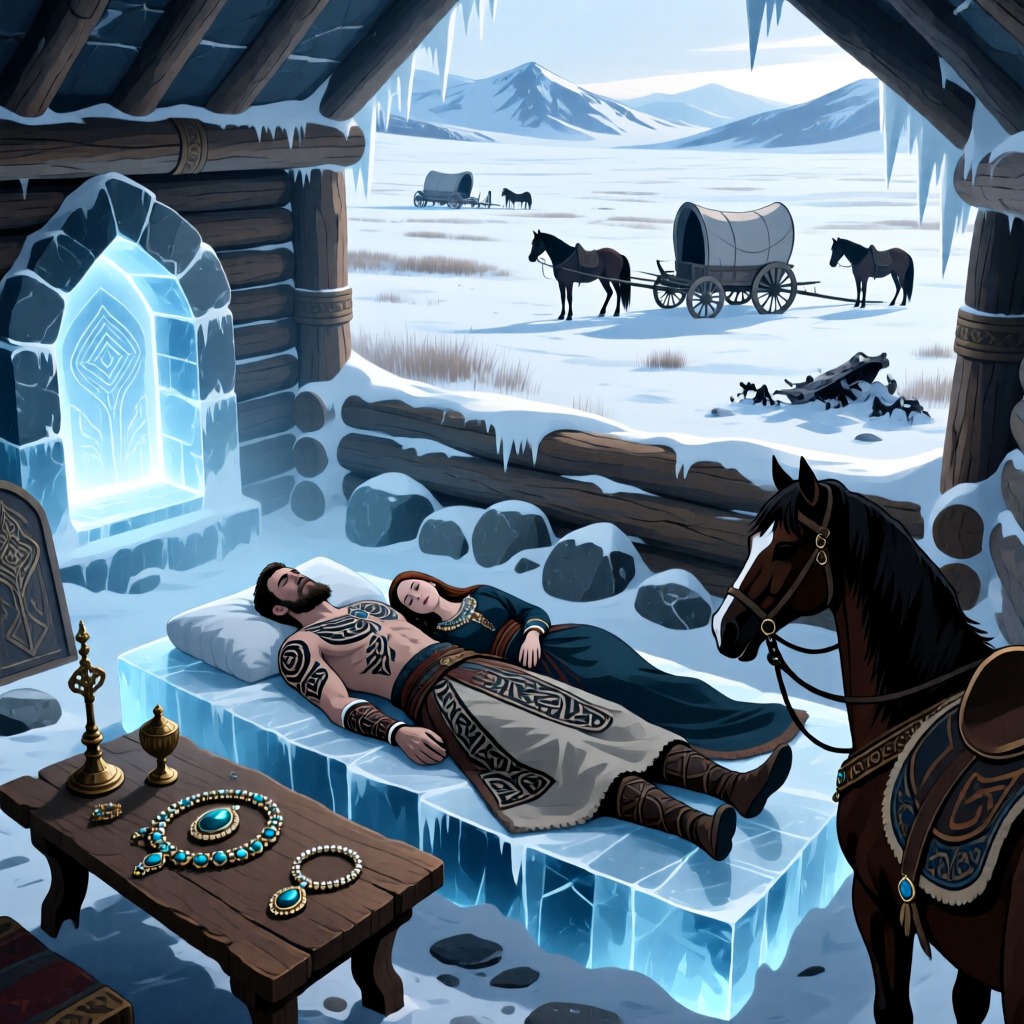

The Scythians, a nomadic people of Central Asia from the 7th century BC to the 3rd century BC, took great pride in their tattoos. In 1948, Soviet archaeologist Rudenko discovered well-preserved Scythian burial sites in the Altai Mountains of Siberia, among which the most remarkable were the frozen remains of a male and female. These bodies not only retained their integrity for 2,500 years but also bore exquisite tattoo patterns.
These tattoos depicted mythical creatures, such as animals with cat tails and wings, griffins, and deer with eagle beaks. They served not only as symbols of status but also as artistic expressions of the Scythians' rich imagination. The male corpse stood at 1.76 meters tall, with a robust physique, and showed signs of having shaved and skinned his head, indicating a long history of horseback riding. Accompanying artifacts included a wooden table, horses, jewelry, and musical instruments, reflecting the lifestyle of that time.
Rudenko also discovered a set of artificial beards made from animal skin in the grave, suggesting a connection to the Scythian tradition of beard-wearing. Additionally, various skulls were unearthed, revealing a complex ethnic background that may reflect intermarriages between the Scythians and other tribes. This discovery not only provides important insights into the lifestyle of the Scythians but also unveils the mysteries of ancient Scythian culture.