The mystery of the Etruscan civilization: the undeciphered 'Mummy Book'.
In 1928, a farmer in the northwestern Italian region of Urzì stumbled upon a burial site of Etruscan people, sparking intense research into this ancient civilization. However, with a significant amount of artifacts being looted, many precious historical records were lost. Archaeologists and historians lamented the fact that numerous valuable items were carelessly discarded, and even forgeries flooded the market. The Metropolitan Museum of Art in New York once mistakenly purchased a pair of fake Etruscan warrior statues, only to uncover the truth years later.
The Etruscans ruled the Italian Peninsula for several centuries, and their artistic works and religious beliefs have piqued the interest of scholars. After the Romans conquered the Etruscans, they held a low opinion of them but still employed some Etruscans for prophetic and divinatory roles. The Etruscans were skilled sailors and had extensive trade connections with Greece, North Africa, and the Near East. However, due to the lack of a deciphered Etruscan language, detailed historical records about them remain unclear.
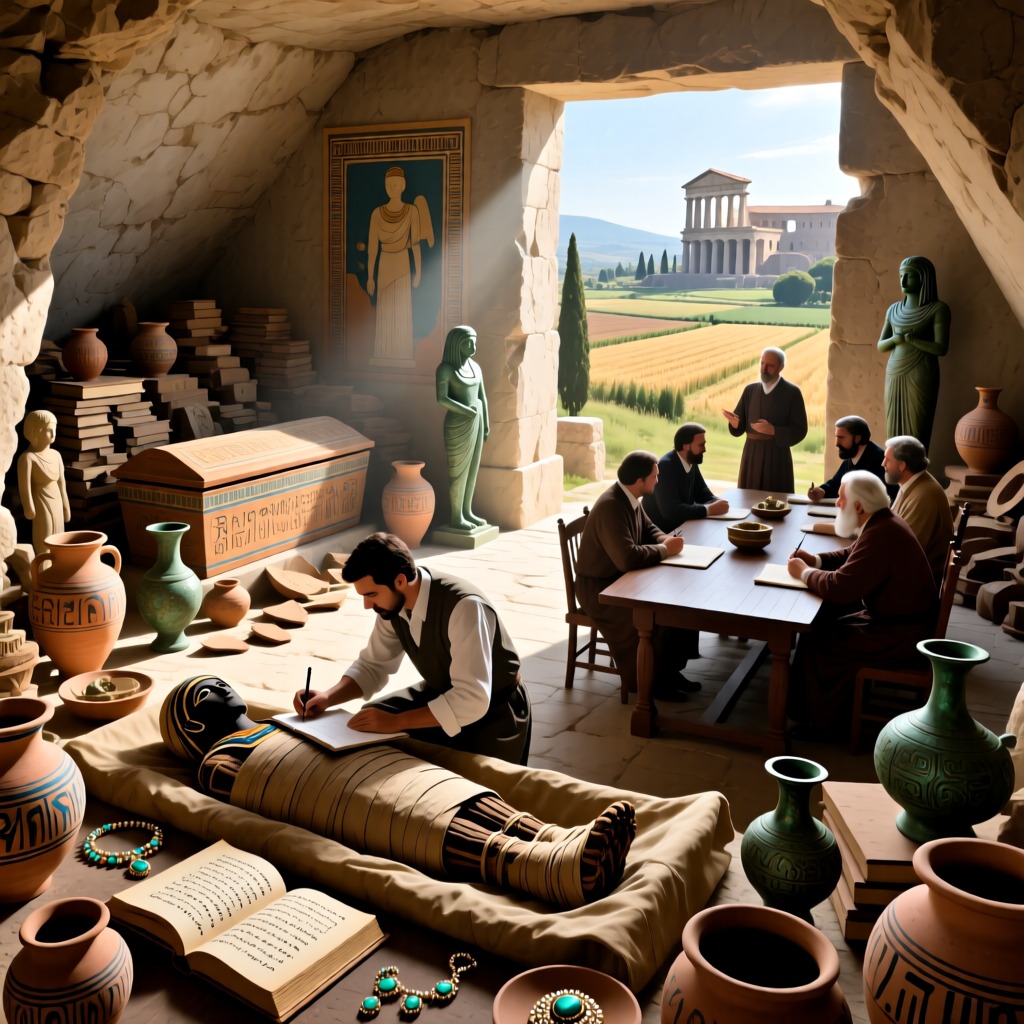
In the late 19th century, a Hungarian official brought back a mummy from Egypt, which contained a piece of writing in Etruscan on its inner wrappings, referred to as the 'Mummy Book'. Although experts took years to confirm that these characters were Etruscan, no one has yet been able to fully decipher them. This has only deepened the enigma surrounding the daily lives and origins of the Etruscans.