
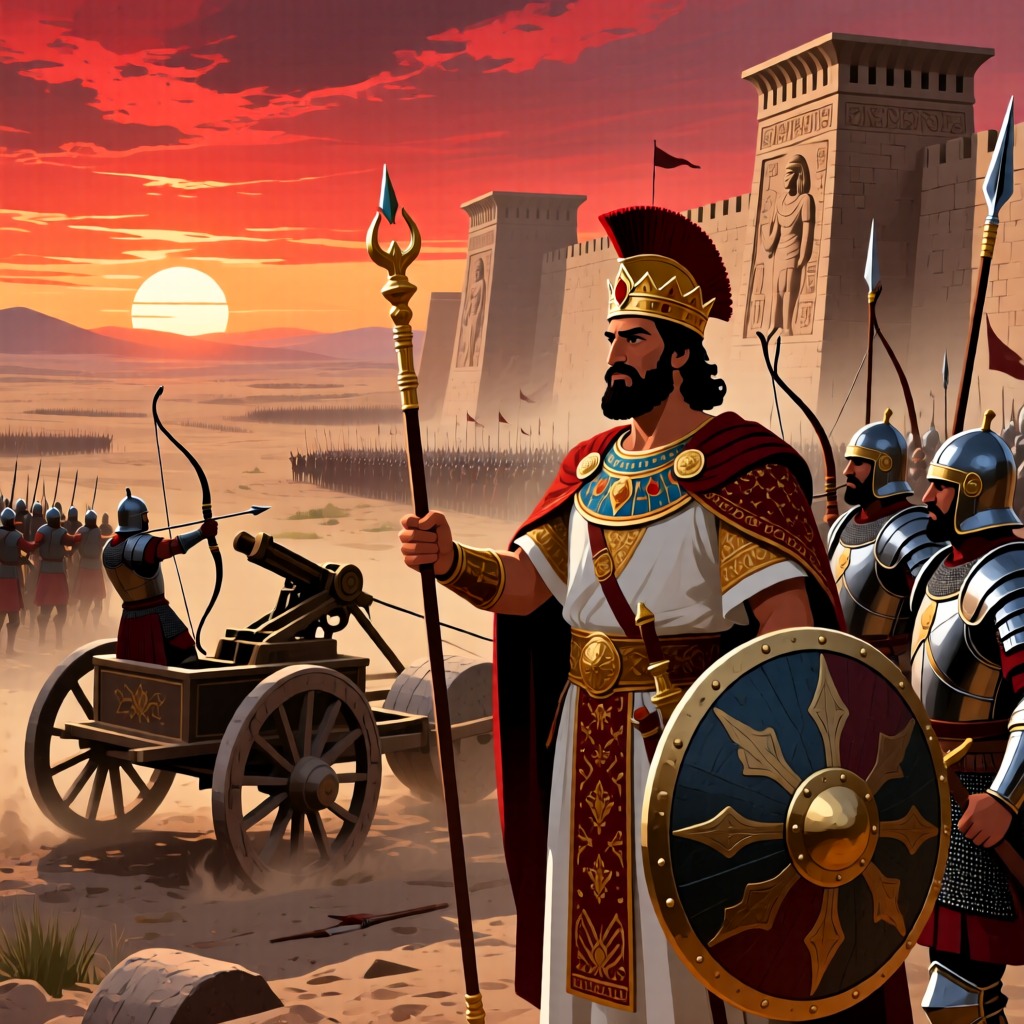

The Assyrian Empire once stood as a beacon of power, renowned for its formidable army, advanced weaponry, and strict discipline, which allowed it to conquer vast territories. However, Assyrian kings often boasted of their brutality by erecting stone monuments in conquered lands, inscribed with graphic depictions of their bloody victories. The strength of the Assyrian military lay not only in its combat prowess but also in its tight organization and efficient logistics. Despite their reputation for cruelty, the empire they built lasted for centuries, bringing peace and prosperity that fostered advancements in art and productivity.
The scale of mobilization in the Assyrian army was immense, evolving from temporary conscription of farmers to permanent mercenaries, and later to mixed units. The Assyrians excelled in siege warfare, with engineering corps playing a crucial role in assaulting fortified cities. Their soldiers were well-equipped, donning various types of armor and wielding bows, catapults, and spears, while light two-wheeled chariots provided rapid mobility.
Assyrian kings were trained from a young age to be versatile leaders, balancing the demands of warfare with governance. They were ruthless towards their subjects, often employing extreme measures to intimidate other tribes. Nevertheless, the Assyrians also constructed many grand cities, such as Nineveh, showcasing their architectural and artistic talents. While they are infamous for their brutality, their contributions cannot be overlooked, as their empire brought lasting peace and prosperity to the surrounding regions.