
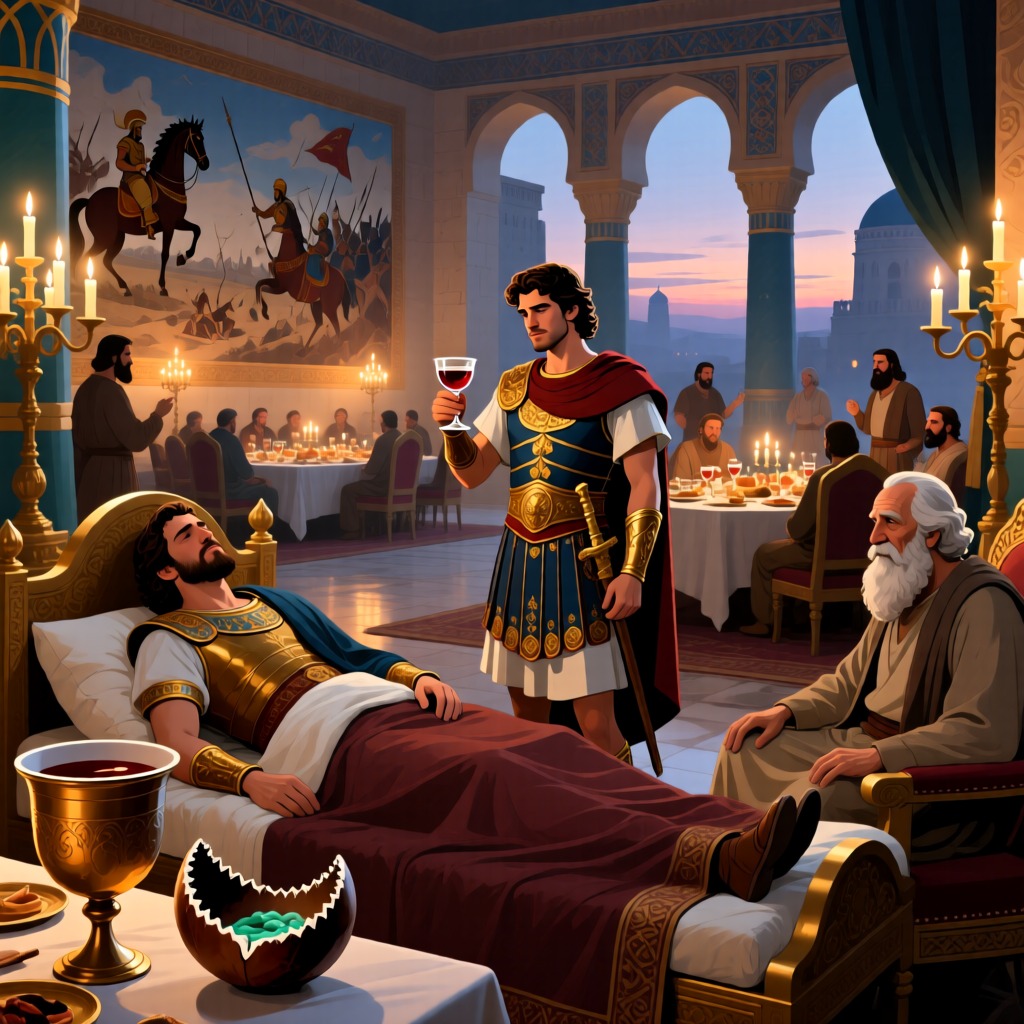

The mystery surrounding Alexander the Great's death remains one of history's enduring questions. As one of the greatest conquerors in history, Alexander's life was filled with legend. In the summer of 323 BC, he suddenly fell ill and died in Babylon at the young age of 32. Historians from both ancient and modern times have proposed various theories regarding his cause of death, including malignant malaria, a fever induced by excessive drinking, and even poisoning. Each theory has its basis, yet the truth remains elusive.
While in the palace of Babylon, Alexander was planning new conquests when he suddenly began to feel unwell, and his condition rapidly deteriorated. Reports indicate that he fell ill with a fever after a night of heavy drinking, and his health continued to decline until he passed away on June 13. His death has sparked widespread debate; some attribute it to natural causes, while others suspect foul play. These speculations lead one to ponder whether the demise of this great leader conceals secrets yet to be uncovered.
