
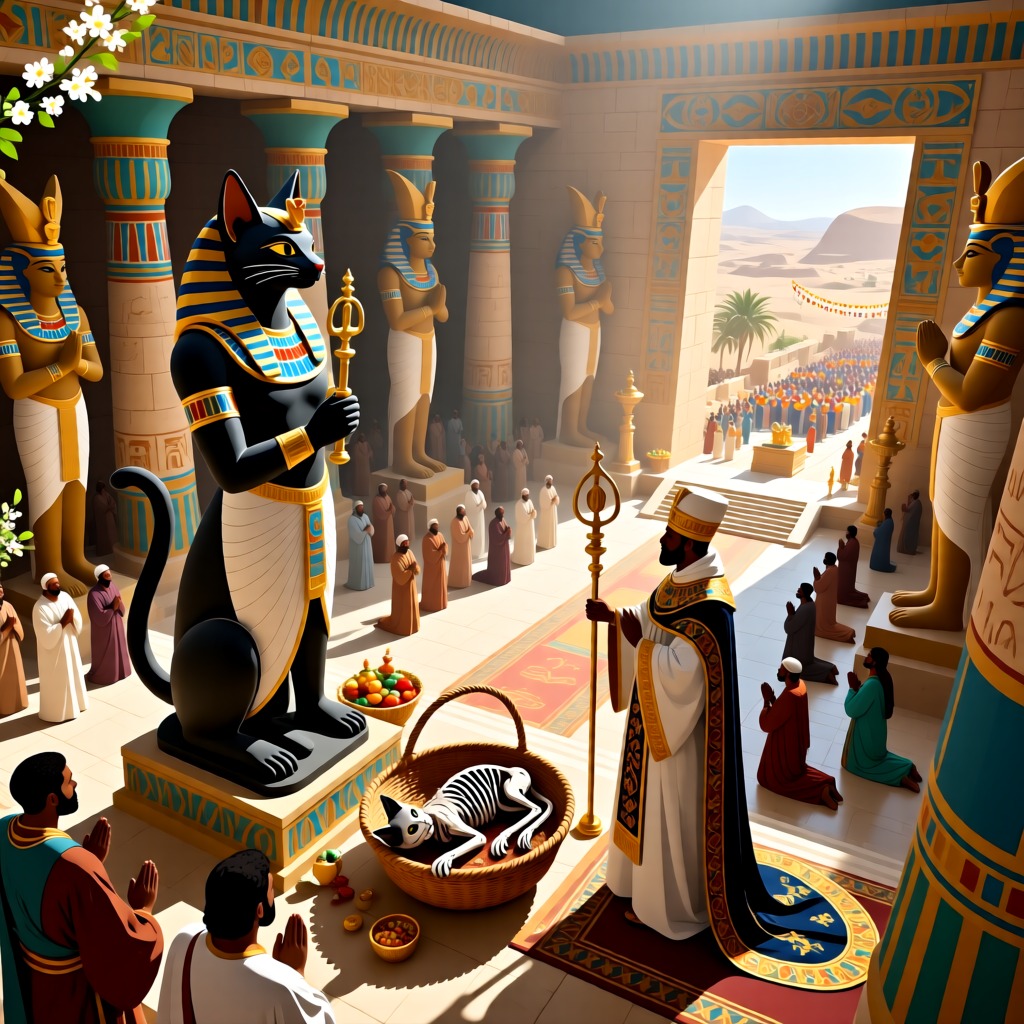

In the second half of the 19th century, the excavation of the Bubastis necropolis revealed the secrets of thousands of mummified cats. These cat mummies were once considered ordinary items, even sold as fertilizer, losing their research value. However, behind these mummified cats lies the significant role of cats in ancient culture. The Egyptians regarded cats as embodiments of the goddess Bastet; when a household cat died, the entire family mourned, and some even faced death for accidentally killing a cat.
In the Bubastis region, the Festival of Bastet attracted numerous devotees, with magnificent temples surrounded by groups of cats. Cats held an important place not only in religious ceremonies but were also greatly respected in daily life. However, over time, their status changed dramatically; they transitioned from divine embodiments to servants of demons, particularly during the Middle Ages when cats faced unprecedented persecution.
In 1952, in a dusty basement of the Natural History Museum in London, 192 mummified cats and other animal mummies were discovered. Through the study of these mummies, scientists revealed the evolutionary history of cats and their role in ancient Egyptian society. These mummified cats were not simply prepared after natural death but were likely used for rituals or sold as commodities.
This discovery not only fills a gap in history but also provides new insights into the domestication process of cats.
