
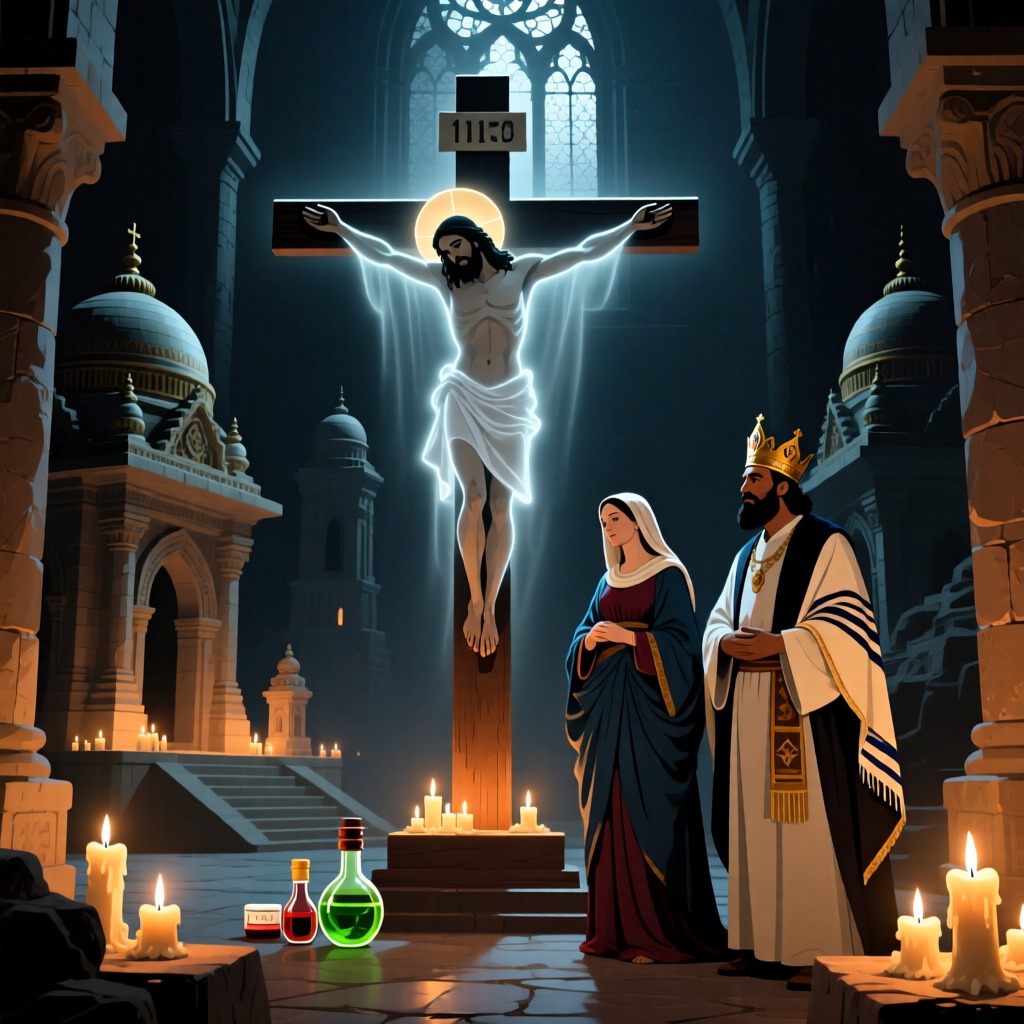

The mystery of Jesus continues to raise historical questions, as the centuries-old cross cannot silence the ringing doubts. According to the Bible, Jesus resurrected three days after his death, but this claim has sparked numerous inquiries in modern times. German scholar Friedrich Strauss proposed in 1835 that the authenticity of Jesus' death cannot be proven from the cross, and that there is a lack of evidence for the resurrection. British scholar Cabot believes that the descriptions of Jesus' execution in the Gospels were intended to fulfill Old Testament prophecies. American expert Laken pointed out that Jesus' death is foundational to the New Testament Gospel narrative and the theological ideas of the entire New Testament.
Two books published in the 20th century offered new interpretations. "The Holy Blood and the Holy Grail" suggests that Jesus was not the savior but a Jewish nobleman who married Mary Magdalene and lived in Gaul. Another German scholar, Keston, proposed that Jesus fled to India in his youth to study Buddhist teachings and returned home 16 years later, preaching under the name "Yozas Asaf" in India until his death. These theories challenge traditional views and have sparked widespread discussion.
