
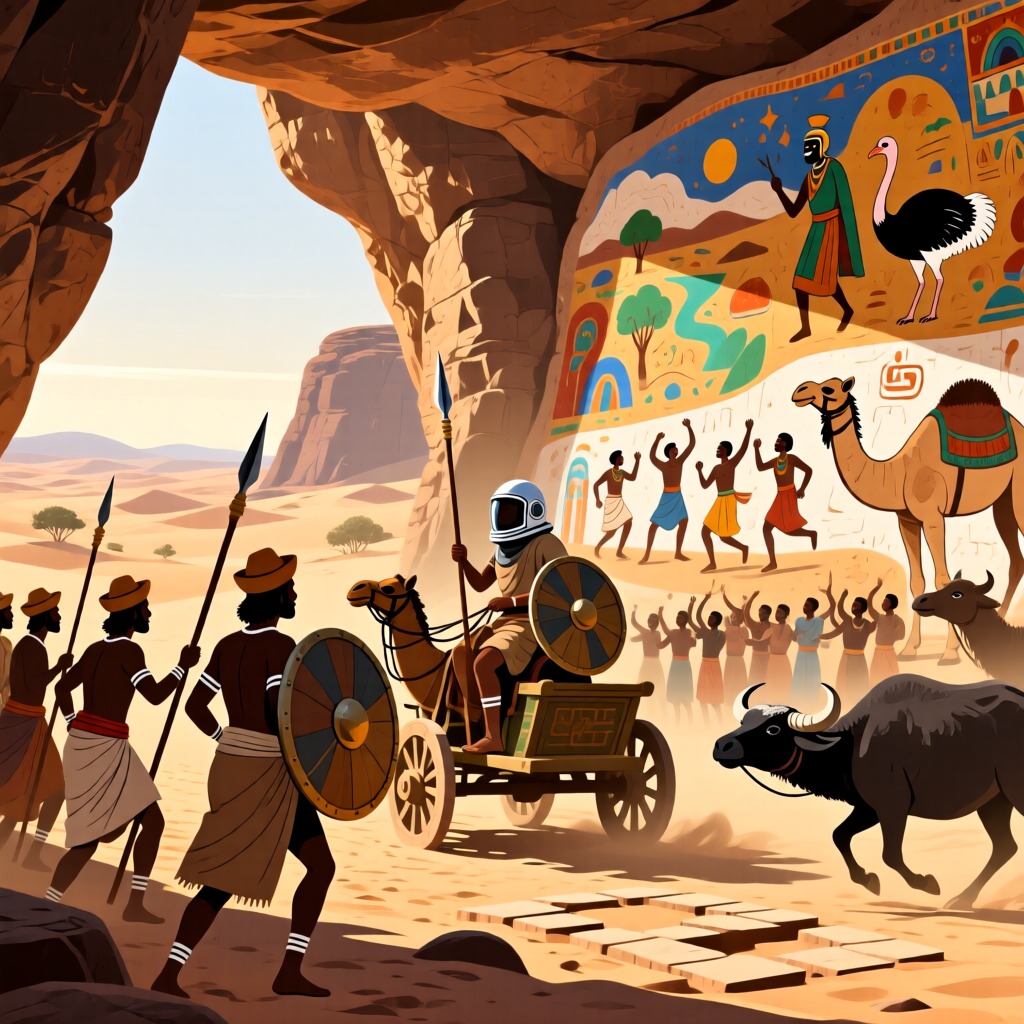

The Sahara Desert, the largest desert in the world, is characterized by its hot and dry climate. However, this desolate land once hosted highly prosperous ancient civilizations. The vibrant and large cave paintings discovered in the desert reveal the secrets of these civilizations. These artworks not only depict the daily lives of ancient people but also illustrate their relationship with nature and possible supernatural phenomena.
In 1850, German explorer Heinrich Barth first discovered rock art featuring ostriches, water buffalo, and various figures while surveying the Sahara Desert. In 1933, a French cavalry unit found extensive cave painting groups spanning several kilometers in the Tassili n'Ajjer plateau in central Sahara. Subsequently, archaeologists flocked to the Sahara, uncovering a wealth of cave paintings. In 1956, a French expedition discovered 10,000 cave paintings in the Sahara, some of which were exhibited in Paris, causing a significant stir.
The figures in these paintings vary widely, with some holding long spears and round shields, others wielding bows and arrows, and scenes of laughter and celebration. The animals depicted, such as water buffalo, ostriches, and elephants, reflect the transformation of the Sahara region from grasslands to desert. Some of the clothing and helmets in the paintings even evoke images of modern astronauts' gear, sparking speculation about connections between ancient civilizations and extraterrestrial life.
The cave paintings of the Sahara Desert are not only treasures of art but also keys to unlocking the mysteries of human history. They reveal the lifestyles, belief systems, and interactions with nature of ancient civilizations. The existence of these paintings enriches and deepens our understanding of human history.