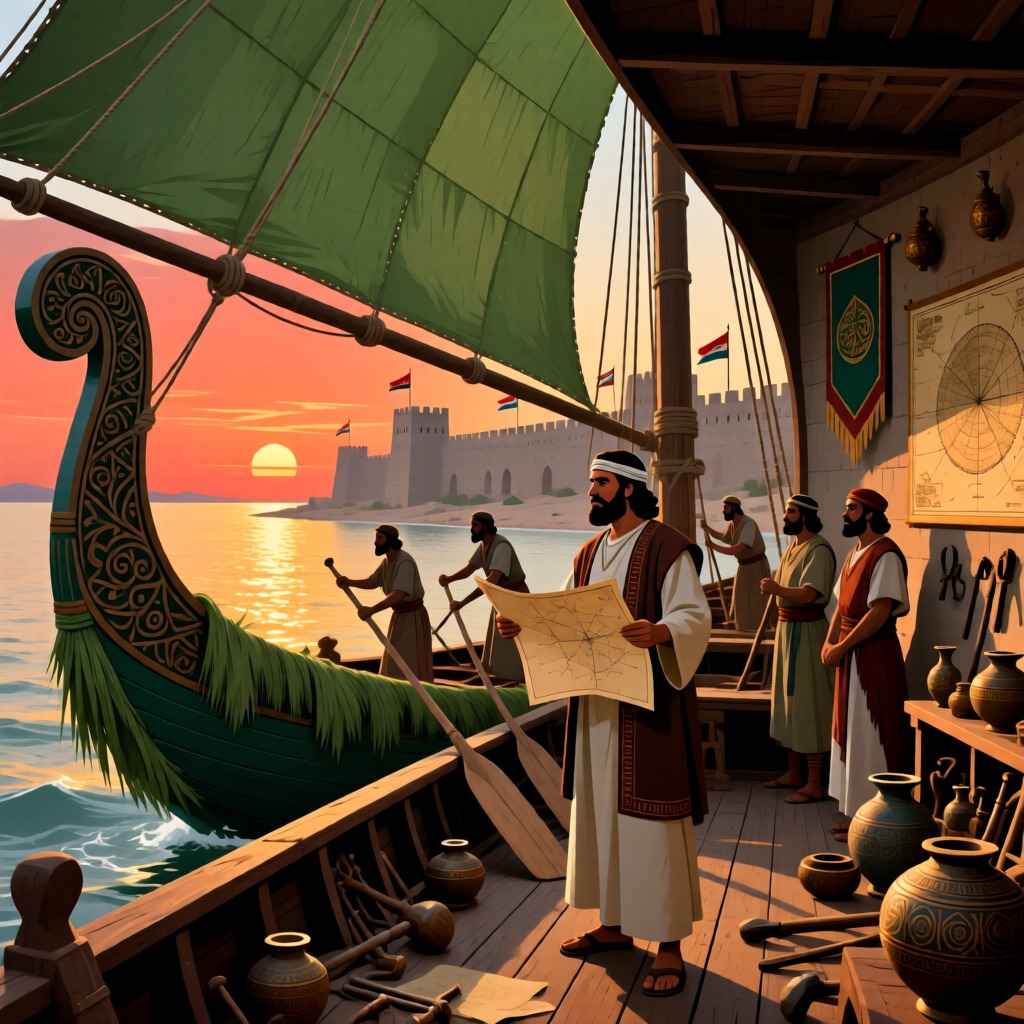
Archaeologists have revealed the mysteries of ancient trade networks through bold imagination and rigorous research. In the 1930s, British archaeologist Professor Mallowan discovered shells from the Indian Ocean at the Chagar Bazar site in Syria, sparking curiosity about ancient trade routes. After more than 50 years of research, Norwegian expert Hayda validated the possibility of maritime trade through experiments with papyrus boats. Archaeologists found extensive trade records in Ur, located in Mesopotamia, proving the existence of a prosperous trade network over 4,000 years ago. These trade networks extended to Bahrain in the Persian Gulf and even reached the Indus Valley, involving various goods such as copper, jewelry, and spices. Ultimately, Hayda's successful experiment with the 'Tigris' confirmed that ancient merchants could traverse the Persian Gulf to reach distant trading partners.
Exploring the Secrets of Ancient Trade Networks