
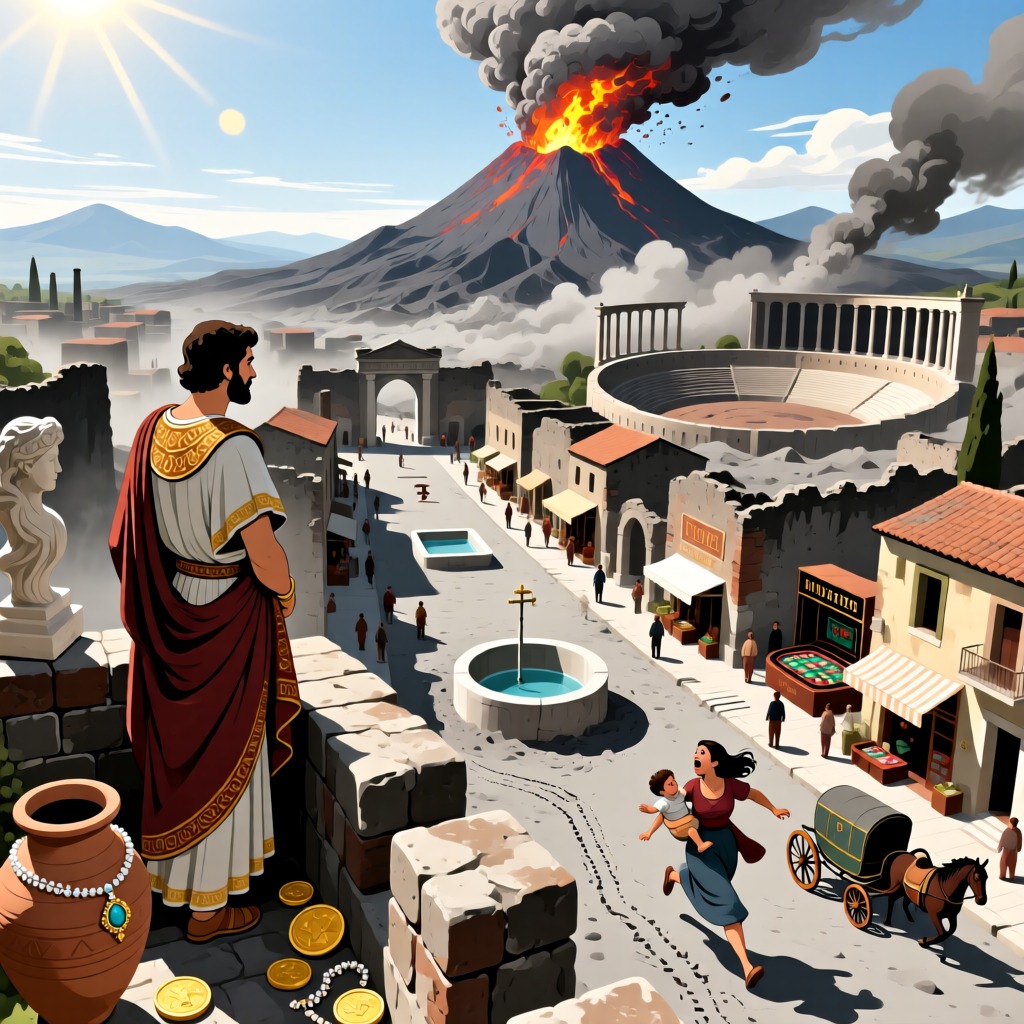

In 1748, the royal engineer of Naples, Alcubierre, accidentally discovered the ancient city of Pompeii while digging an aqueduct, unveiling the mystery of this city that had slept for a thousand years. After more than a century of large-scale excavations, Pompeii gradually reemerged, showcasing its former prosperity and splendor. However, why did this ancient city suddenly vanish on a day in 89 AD? People are still exploring the answer to this question.
On August 24, 79 AD, Mount Vesuvius erupted, sending thick smoke and volcanic ash pouring over the city of Pompeii. While it is commonly believed that the city was buried in an instant, some scholars have proposed different viewpoints. The eruption lasted for eight days and nights, with two major eruptions occurring during this period, preventing the residents from escaping in time and ultimately leading to their burial. How did Pompeii become a 'fossil city' during the volcanic eruption? This is attributed to the effects of 'water-lava.' Continuous heavy rains over eight days formed mudflows that sealed the city tightly, preserving its integrity.
Why did the residents of Pompeii suddenly disappear? Why was Naples unaffected? These questions continue to puzzle people today. The disappearance of Pompeii is not only a testament to a natural disaster but also a mystery in the history of human civilization.
