
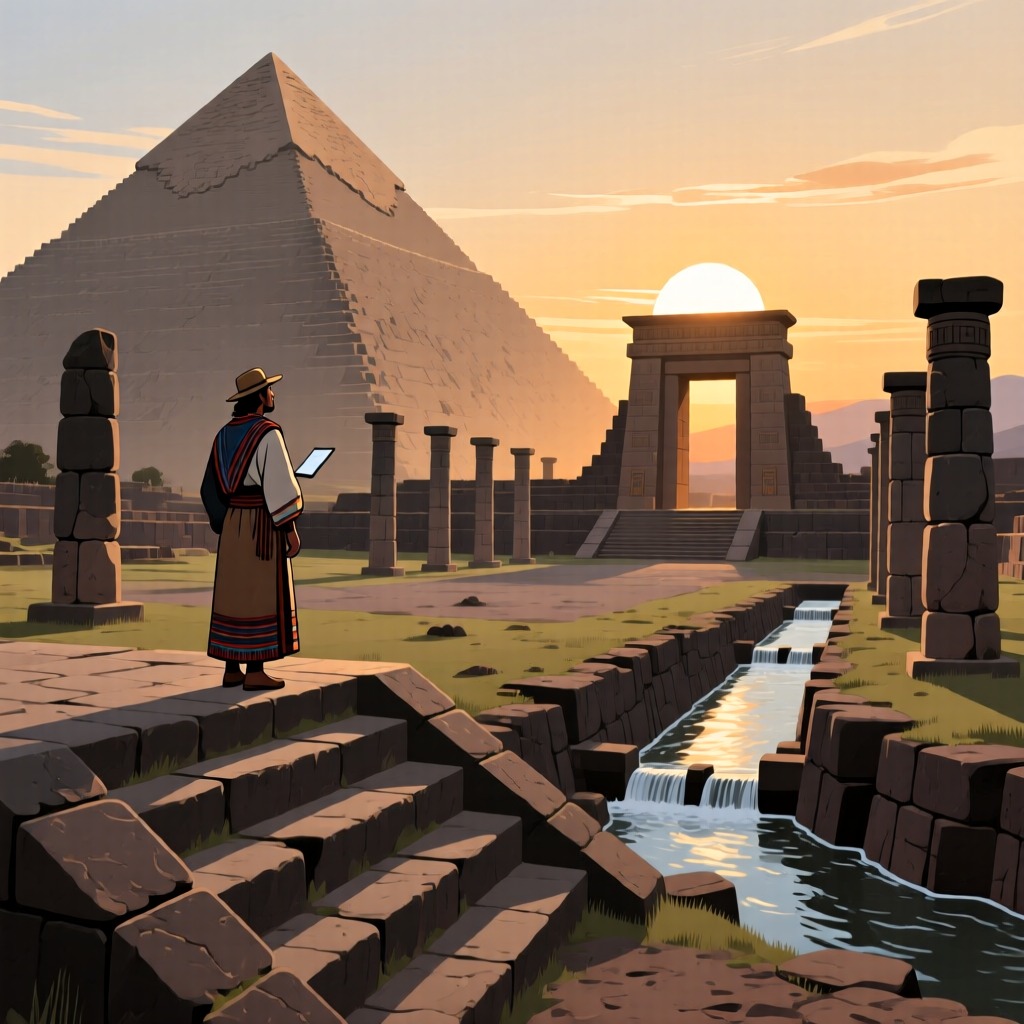

Standing at the foot of the Akapana Pyramid, I can almost feel the mysterious aura of this ancient structure. The sunset casts a warm glow on the massive stone door, highlighting the surrounding ancient scenery. Vega mentioned this pyramid in his writings, along with the nearby Kalasasaya Plaza. The name of this plaza means 'the place where stones stand' in the local Aymara dialect.
This pyramid rises 50 feet high and is oriented to the four cardinal directions: east, west, south, and north. Although its base is not perfectly square, each side measures 690 feet, making it one of the iconic structures of the ancient city of Tiwanaku. However, due to centuries of plundering by the Spanish, only about 10% of the architectural remains survive today.
As I walked around the pyramid, I discovered that it was once a complex engineering feat. Originally, the pyramid was constructed from earth and covered with neutral feldspar, complete with steps and a smooth tower. However, it was used as a quarry, leading to the loss of many valuable historical materials.
The internal water system of the pyramid is equally remarkable. Archaeologists have uncovered an intricate network of channels designed to channel water from a reservoir at the top of the pyramid into the surrounding moat. It is speculated that this may have been for a specific purpose, such as worshiping rain or river deities, or related to some mysterious 'device'.
I continued to explore Kalasasaya Plaza, where stone columns stand tall, spaced apart, resembling swords, each over 12 feet high. The design of these columns and walls evokes thoughts of ancient astronomical observation points. It is said that these structures could help people accurately predict the changes of the seasons. The most famous among them is the 'Gate of the Sun', intricately carved with calendar patterns that reflect the wisdom of ancient astronomers.
These mysteries and ruins lead me to ponder the secrets hidden behind the architecture of this lost empire.
