
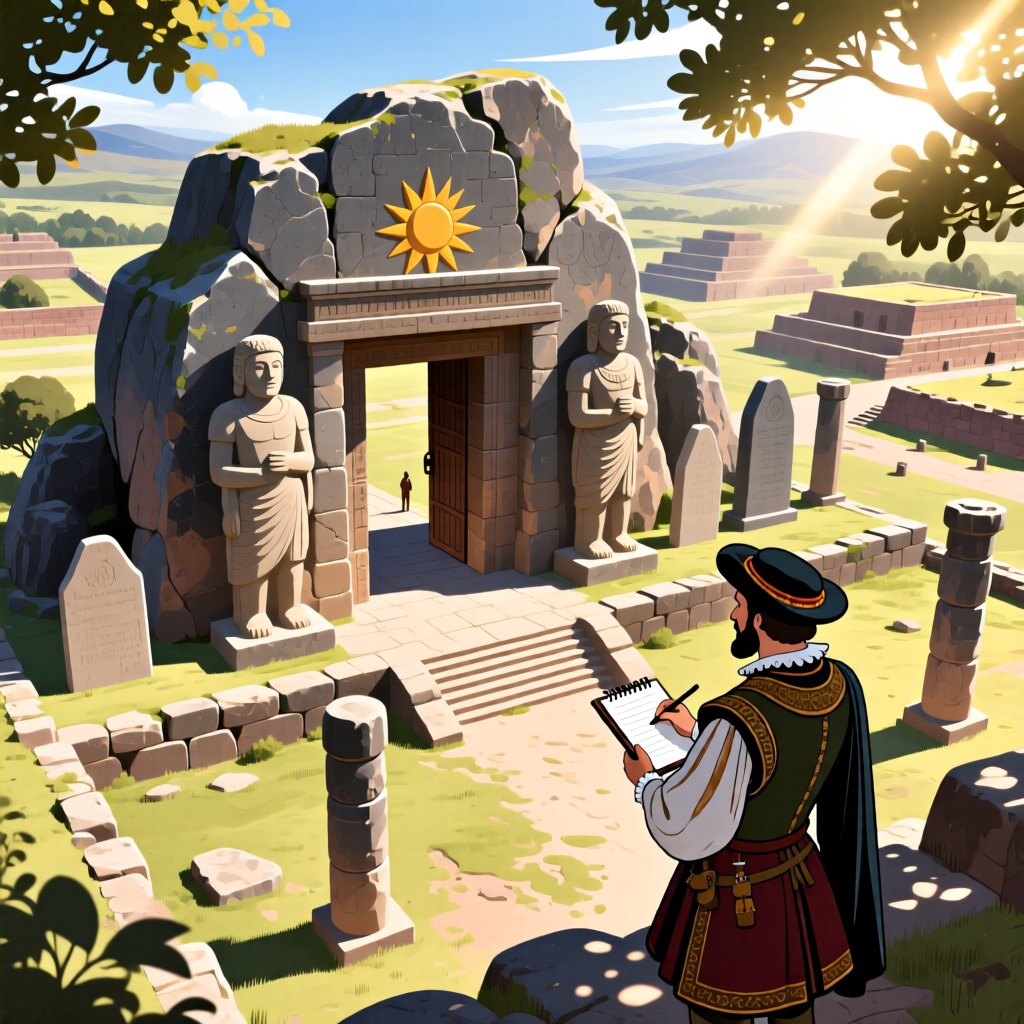

Early Spanish visitors were awestruck by the grandeur and mysterious atmosphere of the ruins of Tiwanaku during the Spanish conquest of Bolivia. Historian Pedro Cieza de León noted in his writings that the locals claimed the buildings in the city existed long before the Inca established their empire. Another Spanish traveler recorded fascinating legends among the indigenous people: stones were said to rise from the ground, seemingly floating in the air, transported to the site of the city.
Shortly after the Spanish conquest of Bolivia, historian Vega provided a detailed description of this ancient city. Despite the invaders having plundered the treasures and building materials, Tiwanaku remained remarkably intact, its impressive scale enough to astonish a Spanish historian. Especially notable were the massive, breathtaking structures within the city, such as the artificial hills, gigantic stone sculptures, and stone gates carved from solid rock. The bases and gates were hewn from the same rock, standing on a base that measures 30 feet long, 15 feet wide, and 6 feet thick. What tools and methods did the people of that time use to accomplish such monumental architectural feats?
More than 400 years later, I visited this ancient city and was equally struck by its grandeur. Despite years of plunder, many large and exquisite stone monuments and pillars still lie scattered around Tiwanaku, leading one to wonder if they were crafted by divine hands.
