
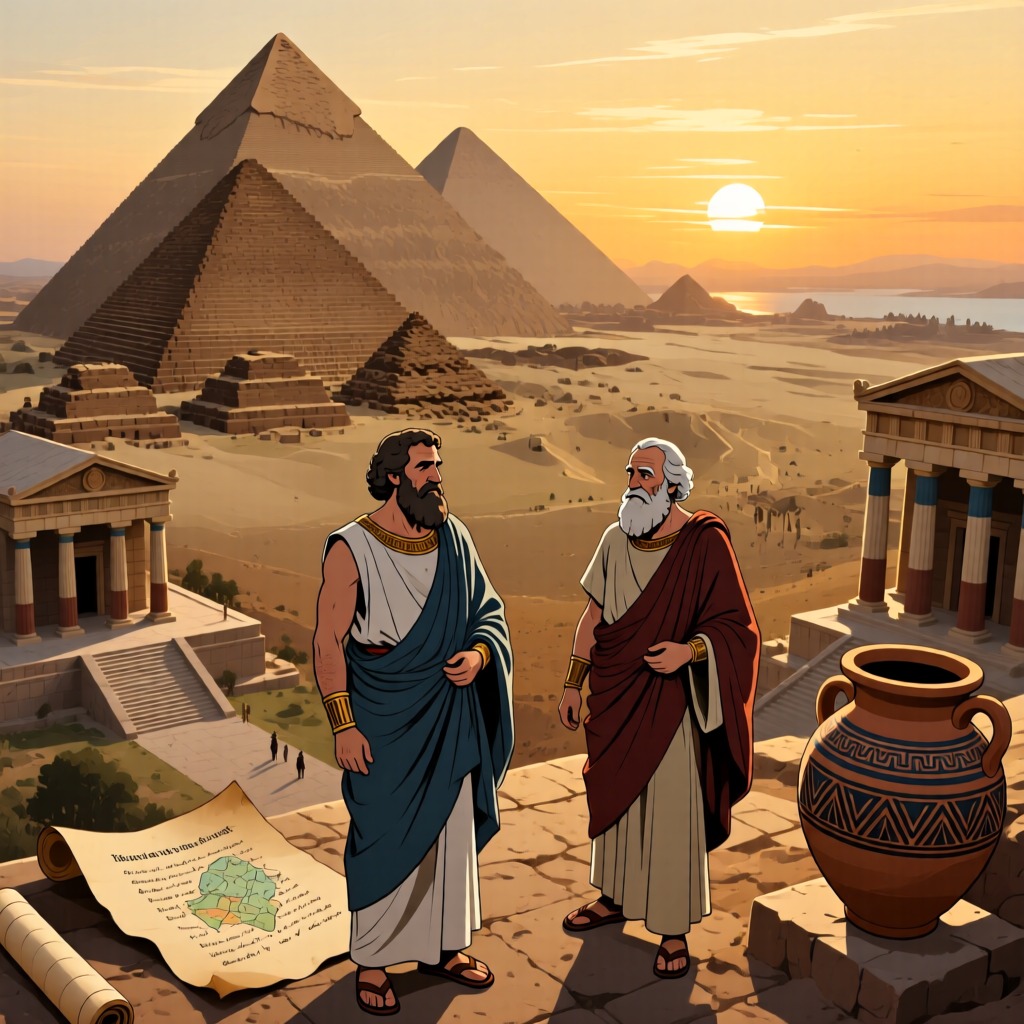

Atlantis: The Mystery of a Lost Civilization
The legend of Atlantis is one of the greatest mysteries in world history. Once a brilliant gem in the annals of human civilization, it was home to extraordinarily wise people who created a highly developed material and spiritual culture. For centuries, countless individuals have sought its traces, yet to this day, we have not found a definitive answer.
The earliest account of Atlantis comes from the ancient Greek philosopher Plato, who learned about it from his cousin, Critias, who in turn heard it from his grandfather, Dropides. Dropides had received the story from the Athenian Solon, who traveled to Egypt, Cyprus, and Asia Minor. Upon returning home, Solon intended to compose an epic poem about the tales he heard, but unfortunately passed away before completing it. In his writings, Plato described the splendor of Atlantis, claiming it was located in the Atlantic Ocean, larger than Libya, with fertile lands, rich minerals, and advanced civilization. However, a catastrophic earthquake and tsunami led to the entire island sinking beneath the waves.
Did such a continent as Atlantis really exist in history?
Skeptics argue that the island of Atlantis is purely fictional, a romantic imagination of Plato and others. They refute it from both temporal and geographical perspectives. On the other hand, supporters believe that the continental drift is not tightly joined, suggesting the possibility of Atlantis. They also present geological evidence, such as seals off the Azores and wild rabbits on the Canary Islands, as well as the bones of elephants and mammoths found among Native Americans, which seem to hint at the existence of a "land bridge" in history.
