
Ur of the Chaldees, located at the confluence of the Tigris and Euphrates rivers, was once the cradle of Sumerian civilization and witnessed the birth of Abraham. In the 4th century BC, the glorious city eventually vanished into the dust of history due to the silting of the Euphrates delta. In 1920, Sir Leonard Woolley unearthed a mysterious "Death Pit" in Ur, revealing the unique understanding of death held by the ancient people of Ur.
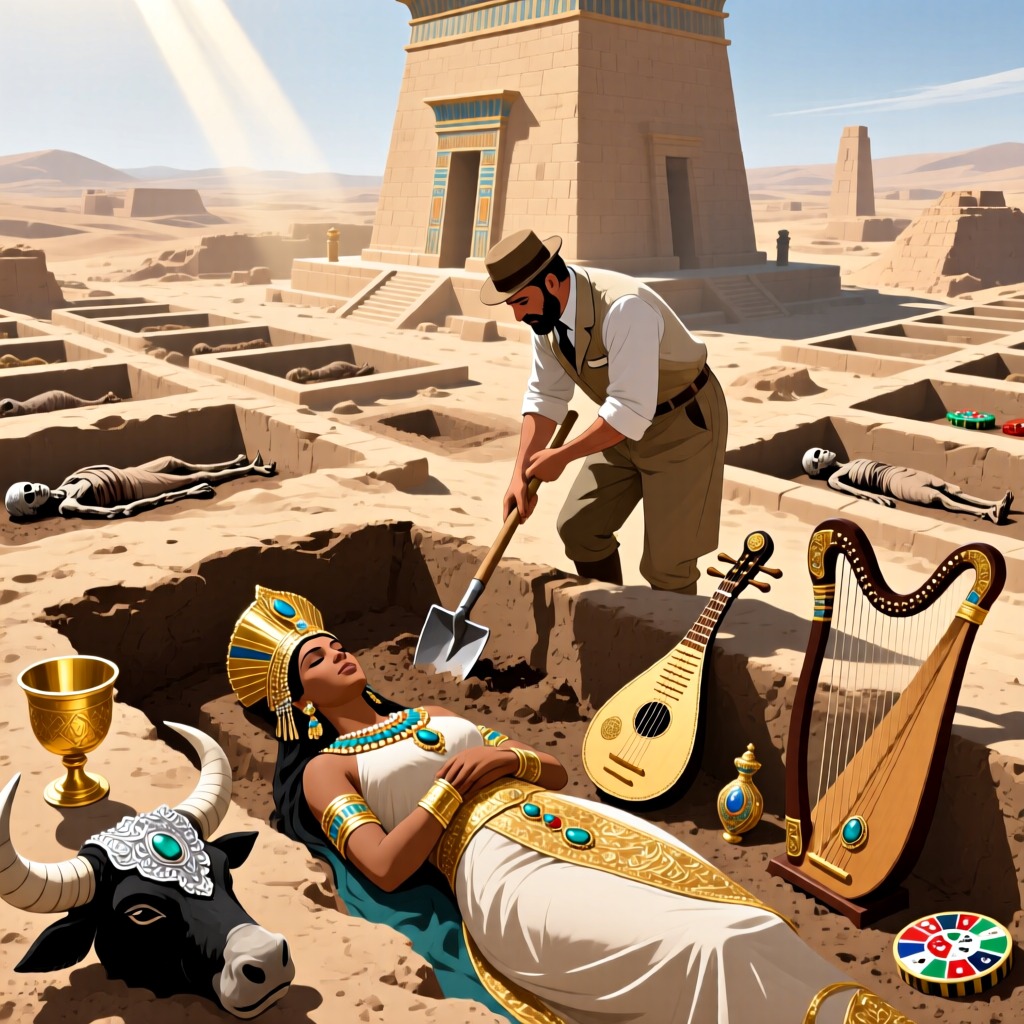
The city was vast, covering an area of seven square kilometers. Although the exact population remains unknown, the gold and silver artifacts unearthed indicate that Ur was once a prosperous place. The exquisite headdress of Queen Shubad and a seven-stringed lyre shaped like a bull found in her tomb attest to the high level of craftsmanship at the time.
In the royal tombs of Ur, Woolley discovered a large number of precious relics, including not only beautiful jewelry and musical instruments but also remnants of chariots and gaming equipment. Particularly notable is the grand tomb known as the "Tomb of Queen Shubad," which contained not only members of the royal family but also dozens of voluntary attendants who chose to be buried alongside them. The serene postures of these attendants suggest they were peacefully asleep, yet experts have differing opinions on the cause of their deaths.
Through the study of the remains of these attendants, Sir Woolley and his team speculated that these sacrifices may have voluntarily followed the royal family, though they could also have been priests or priestesses' assistants. Chemical analysis of substances found in small cups indicates that some women may have ingested silver-laced concoctions before their deaths. Although the truth remains a subject of debate, the calmness displayed by these attendants in the face of death is undoubtedly admirable.