
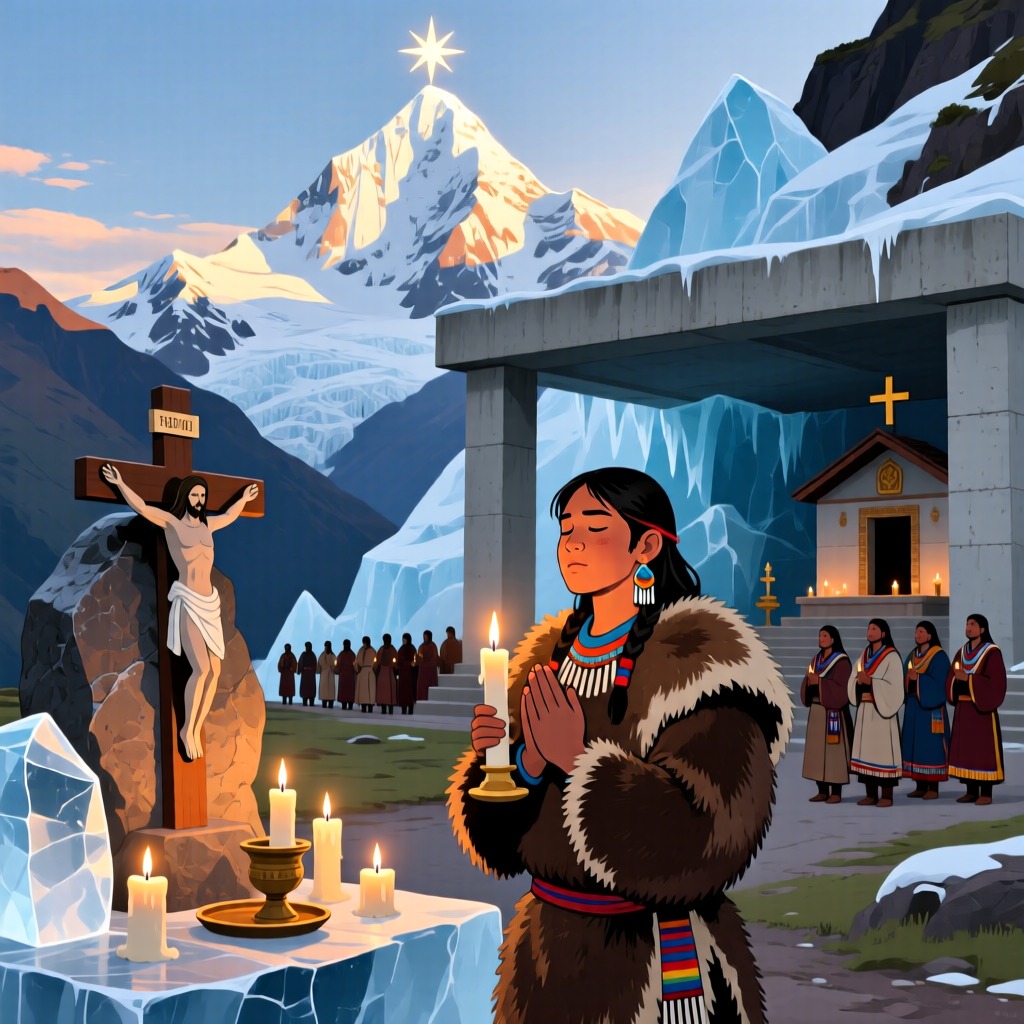

The indigenous pilgrimage activity has a long history and continues to perplex anthropologists today. In Peru, approximately nine weeks after Easter, indigenous people hold a grand pilgrimage ceremony, converging from all directions to the 'Snow Star' sanctuary, located 50 miles east of Cusco. Thousands of participants, adorned in feathered costumes, sing and dance, creating a spectacular scene.
At two in the morning, young 'Ukuku' wear bear skin costumes and ascend to the peak of the glacier to dig ice caves and light candles for prayer. At dawn, they return to the altar with blocks of ice, distributing them to villagers who believe in their healing properties. A rock engraved with the image of Christ stands at the altar, commemorating the miraculous experience of a young shepherd. Hundreds of candles illuminate the faces of the faithful, who weep for Christ's suffering.
As the 'Ukuku' return, the final mass resonates beside the altar, and the crowd carries the statue of Christ back down the mountain path to the village. As daylight breaks, the statue is placed inside a small chapel. This ritual is not only rich in religious significance but also blends ancient indigenous traditions. Scholars have differing opinions on the origins of this pilgrimage, with some attributing it to a Christian miracle that began in 1780, while others believe it has roots in even earlier times. This reflects the varying perspectives on the fusion of Christianity and indigenous beliefs.