
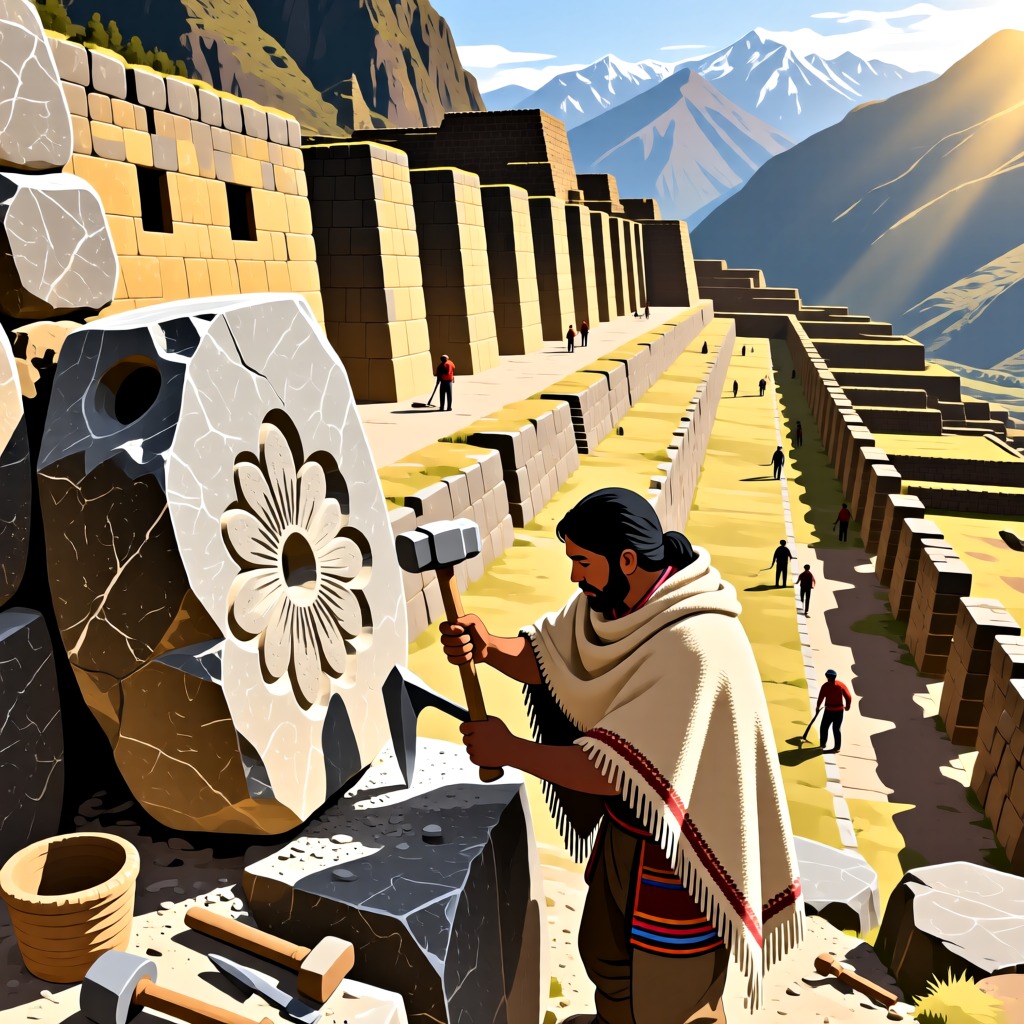

Perched at an altitude of 3,500 meters above sea level in Cusco, Peru, the Inca fortress of Sacsayhuamán is truly breathtaking. The massive stone structures are seamlessly interlocked without the use of mortar or cement. One granite block, standing 8 meters tall, is polished to perfection, as if crafted by modern machinery. Even more astonishing is the fact that there are no gaps between these massive stones, allowing them to remain stable even during earthquakes. How were these structures built? Did the Incas possess extraordinary technology, or was there some other force involved in this construction?
A similar enigma exists in Puma Punku, Bolivia. Here, a massive diorite stone features intricately carved grooves and holes, clearly indicating careful craftsmanship. One 10-meter tall diorite block has a groove the width of a hair, with small holes spaced every few centimeters along its length. Such craftsmanship demands a high level of precision, seemingly achievable only with the most advanced tools. However, the people of that time did not have access to metal tools, let alone complex machinery.
Who exactly created these wonders? Some believe it was the Incas, who possessed advanced architectural techniques and mathematical knowledge. Others speculate that perhaps other civilizations or extraterrestrial intelligent life played a role in this construction. After all, the design and construction methods used in Puma Punku far exceed the understanding of the people of that era.