
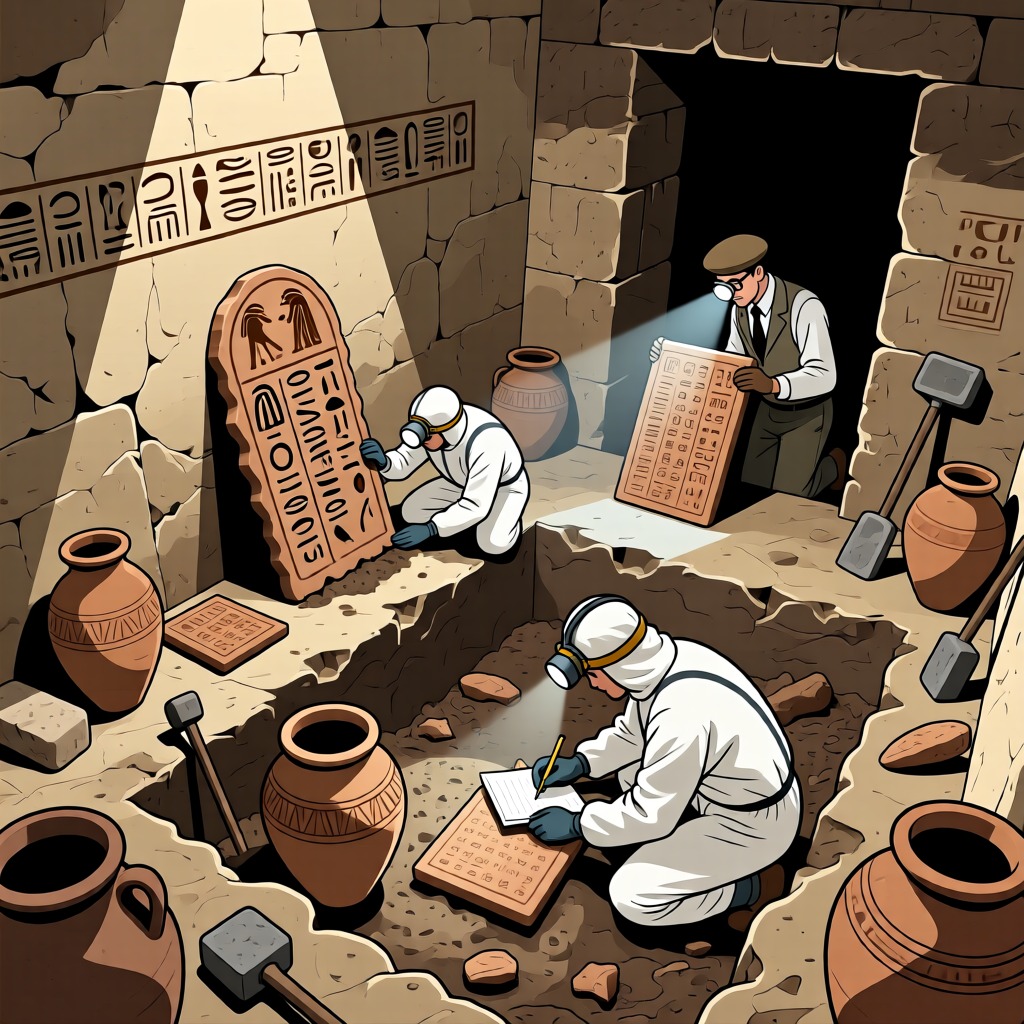

The mystery of the earliest writing: the discovery of the Sasori script.
In early 1999, a German archaeological team uncovered a large number of inscribed jars and clay tablets in the tomb of Pharaoh Sasori I in southern Egypt. Scientific analysis confirmed that these inscriptions were written between 3300 and 3100 BC, with some dating even earlier, to around 3400 BC. This discovery garnered significant attention in the academic community, as it may represent one of the earliest known writing systems in the world.
However, there has been ongoing debate in academia regarding which script is the oldest. The Sumerian script from Mesopotamia is often regarded as the earliest writing, but Egyptian hieroglyphs also emerged around the same time and have even earlier origins. Additionally, Chinese oracle bone script and bronze inscriptions, as well as the Harappan script from India and pictographs from Greece and the Americas, boast histories spanning thousands of years. Therefore, the crux of the matter lies in whether these pictographs truly function as writing.
Some scholars argue that these early scripts may have been merely 'picture writing', primarily used to mimic objects rather than express language. True writing should be able to represent the sounds of language, rather than just depict the shapes of objects. From this perspective, the earliest writing may have been the syllabic script of the Sumerians around 1800 BC, while the Sasori script had not yet developed to that stage.
