
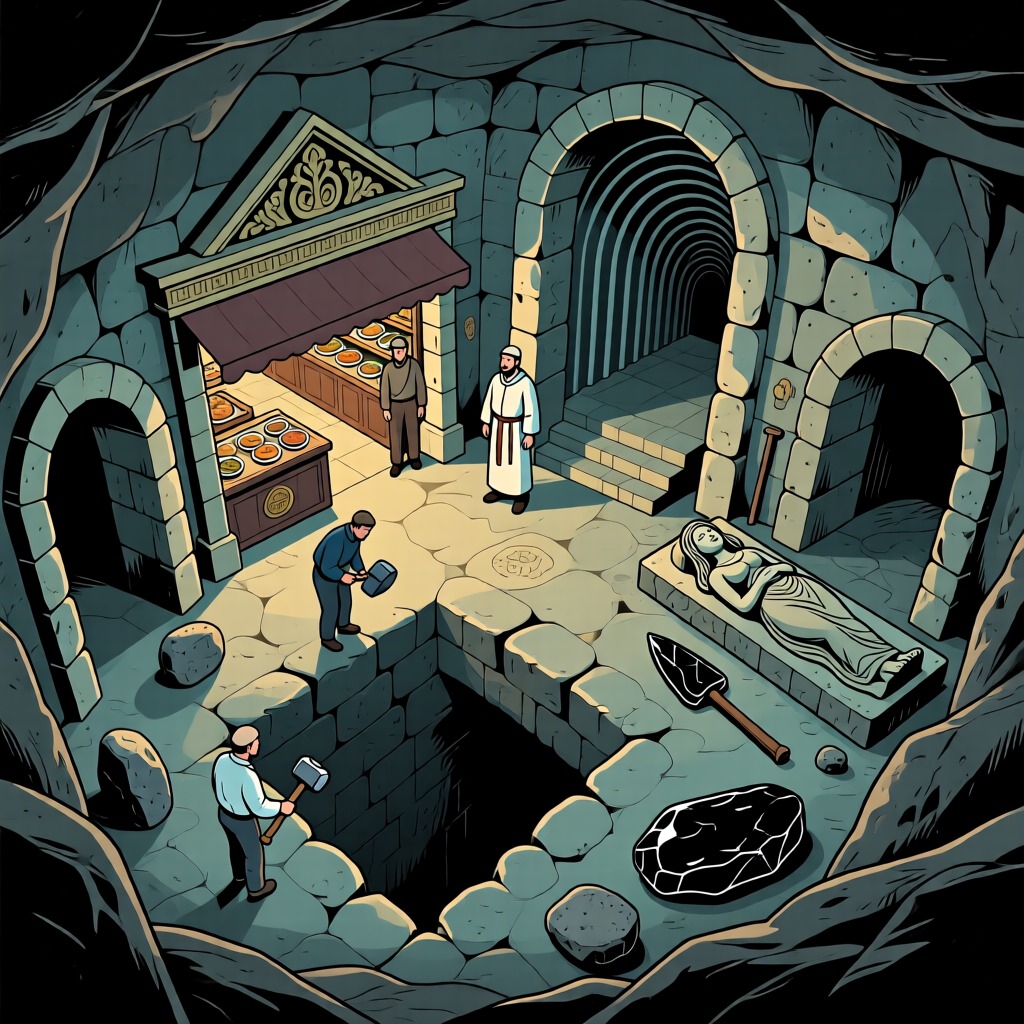

In the town of Paola on the island of Malta, a food store conceals an astonishing historical site. In 1902, construction workers digging limestone to build a reservoir accidentally uncovered a massive stone cave. Initially, the workers treated this cave as a place to dump trash. However, one worker noticed that the cave was not naturally formed but was carved by human hands. He reported this to local archaeologists, who ultimately unveiled the mysteries hidden underground. Upon clearing the debris from the cave, archaeologists discovered multiple stone chambers, some even extending to three levels, containing a total of 7,000 skeletal remains. These remains were not complete human skeletons but rather bones that had been relocated after burial. The design of the cave is remarkable, particularly a section known as the 'Oracle Room,' which produces a unique echo effect.
Archaeologists speculate that this cellar may have had religious purposes, especially as a site for priestly oracles. However, the discovery of female reclining figures and notably large side figures suggests that it might have been a place of worship for female deities. The cave's darkness and echoing effects undoubtedly instill a sense of awe in those seeking divine guidance. Additionally, the presence of 7,000 skeletal remains raises further questions. These remains were not the result of a single burial but were concentrated here through relocation. This makes the cellar resemble both a temple and a tomb. No one knows for certain what the original purpose of this cellar was or when it transitioned into a burial site. Although the cellar mimics the architectural style of above-ground temples, it may also represent an inverted construction method, imitating surface temples to create a burial site.
The purpose of this cellar remains an unsolved mystery, perhaps forever without an answer. It stands as a testament to an ancient civilization and a captivating historical enigma.
