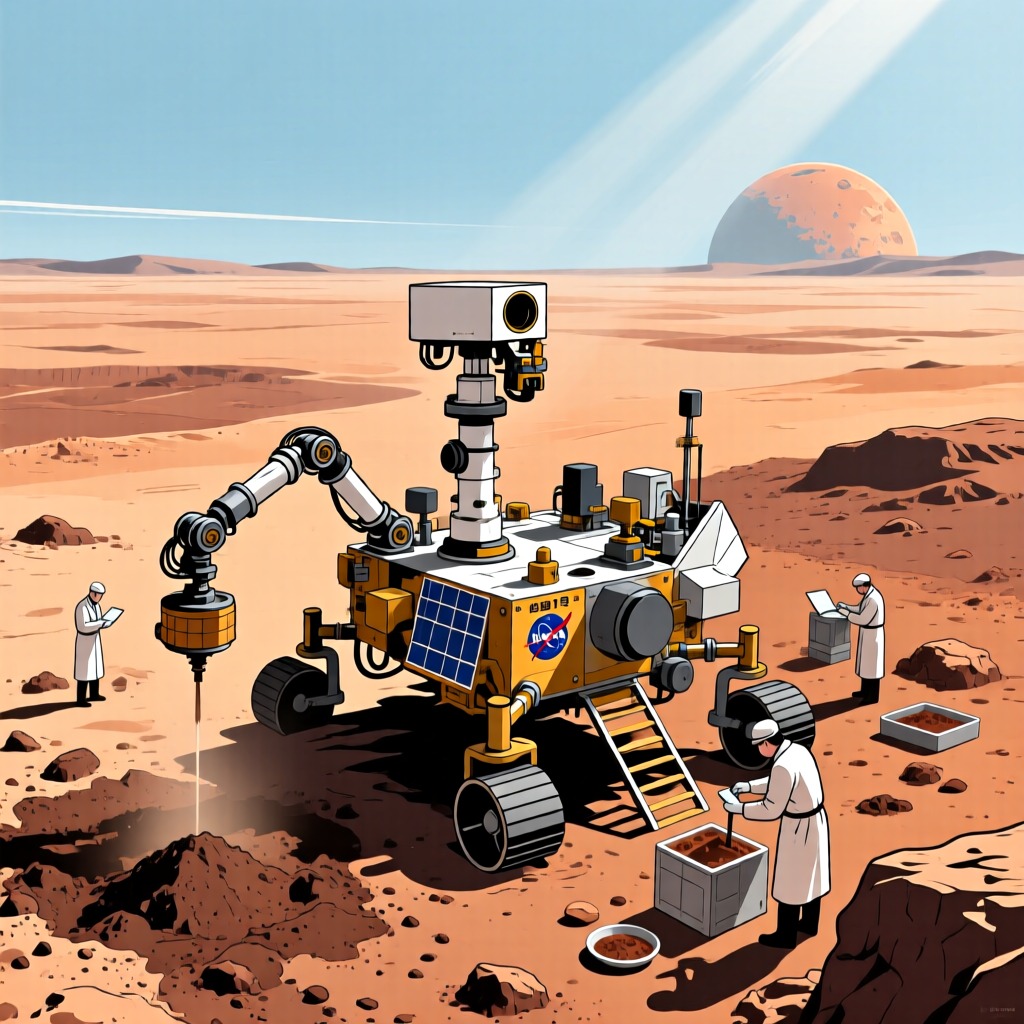
In 1890, American astronomer Percival Lowell observed canal-like features on the surface of Mars, sparking imaginations about the possibility of life on the planet. Beginning in the 1960s, the United States and the former Soviet Union embarked on extensive Mars exploration programs. The U.S. Viking 1 and Viking 2 landers successfully touched down on Mars, revealing the planet's geological characteristics. Moving into the 1990s, the U.S. continued its Mars exploration efforts, discovering evidence that water may exist on the Martian surface. In 2008, the Phoenix lander found water ice on Mars, further confirming the hypothesis of water's presence on the planet. These exploration activities not only unveiled Mars' natural environment but also provided clues in the search for Martian life.
The Mystery of Life on Mars