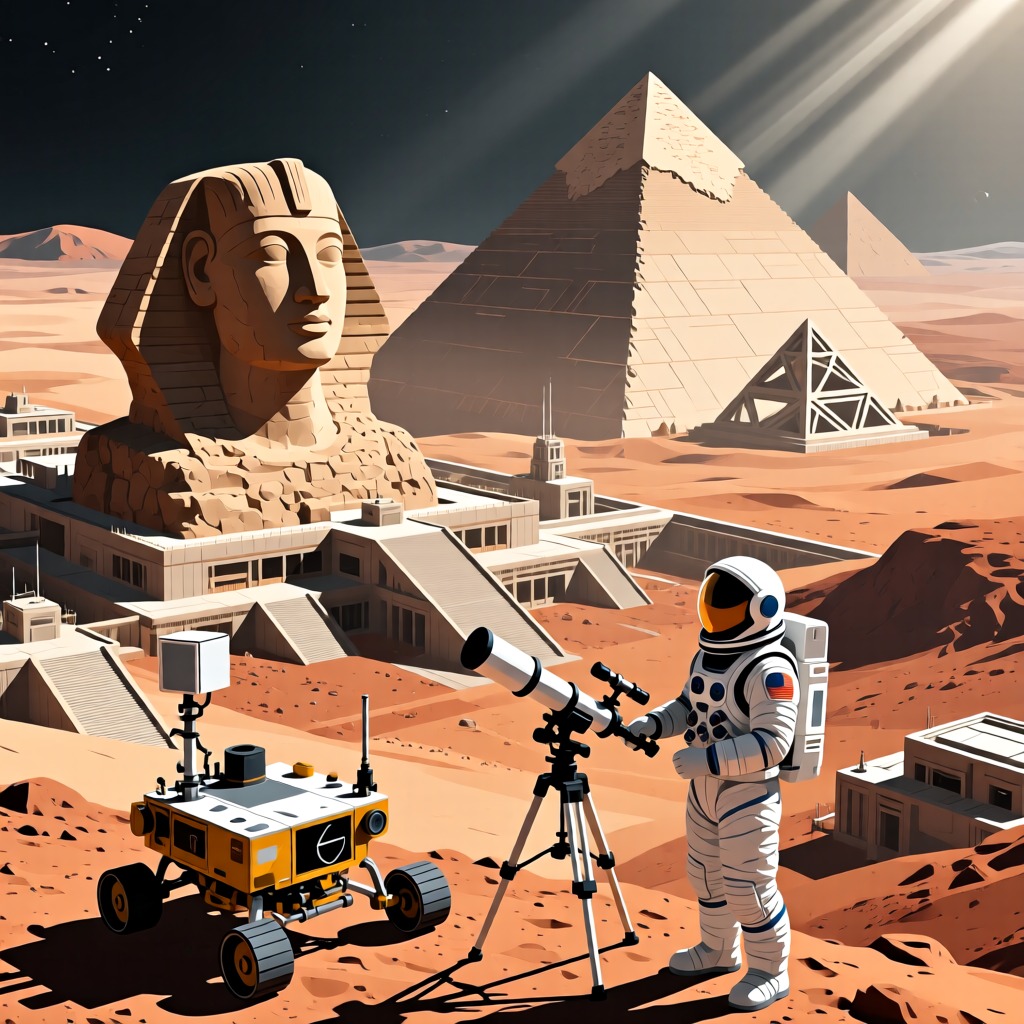

The mysteries of Mars include the astonishing discovery made by the U.S. Viking 1 spacecraft in 1976, which sent back images of a gigantic face-like structure towering on a mountain. This statue is an incredible 16 kilometers long from the top of its head to its chin, featuring eyes with pupils that bear a striking resemblance to the Great Sphinx of Egypt. Approximately 9 kilometers away from this face, there are four symmetrical structures that resemble pyramids. These images have sparked numerous speculations about the possible existence of intelligent life on Mars.
Over time, more discoveries of peculiar structures on Mars have been reported. For instance, in the southern polar region, complex geometric structures known as the "Incan City" have been found. In the northern hemisphere, the Cydonia region has revealed black circular formations similar to Egyptian pyramids. Surrounding these structures are roads and strange circular plazas with diameters reaching up to 1 kilometer. These findings have ignited widespread discussion among scientists and the public alike.
While many scientists argue that these images are merely the result of natural erosion, there is still substantial evidence suggesting that these structures may not be naturally formed. For example, the eyes and pupils of the face are remarkably symmetrical, which is difficult to achieve through natural processes. Additionally, the ratio of the short to long sides of the pyramids adheres to the golden ratio, a phenomenon that is exceedingly rare in nature.
Experts estimate that these structures are around 500,000 years old, making them compelling evidence of ancient civilizations on Mars. Some even speculate that these structures could be artistic masterpieces left by Martians or remnants of extraterrestrial activity on the planet.