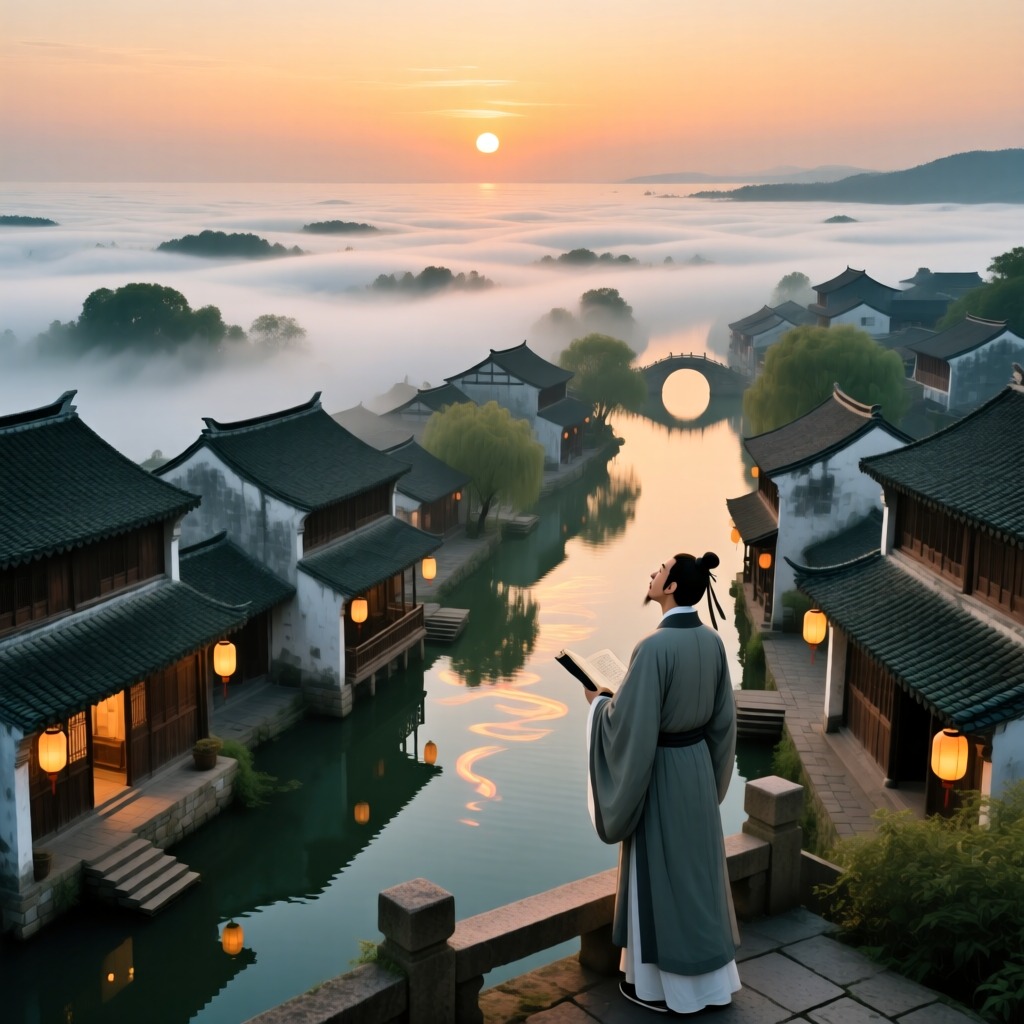
The fantastic world of mirages is not only a visual feast but also a marvelous creation of nature. The bright sun can sometimes take on lively and interesting shapes, transforming into flat circles, triangles, and even mushroom or egg shapes. The colors of the sun can also change, displaying reds and oranges, as if the sunset is painted with blush.
Behind these wondrous sights lies the secret of the atmosphere. When the sun approaches the horizon, its light must pass through a very thick layer of air with varying densities, causing the sun's shape to distort. Additionally, as light passes through the constantly convecting warm air, the sun can appear to sway. These phenomena are part of the mirage effect, sparking boundless imagination.
The essence of a mirage is the refraction and reflection of light. Light bends in areas of differing air density, much like how a stick appears broken when viewed through different mediums. When there is an unusual vertical change in air density, light can undergo total internal reflection, forming a phantom image, which is what we call a mirage.
During sunrise and sunset, the sun's color becomes redder. This is because the light emitted by the sun consists of seven colors: red, orange, yellow, green, blue, indigo, and violet, with red having the longest wavelength. As sunlight passes through the thick atmosphere, violet and blue light are scattered away, leaving only the red wavelengths. Therefore, the sun always appears red during sunrise and sunset.
All of this is a magical gift from nature.