
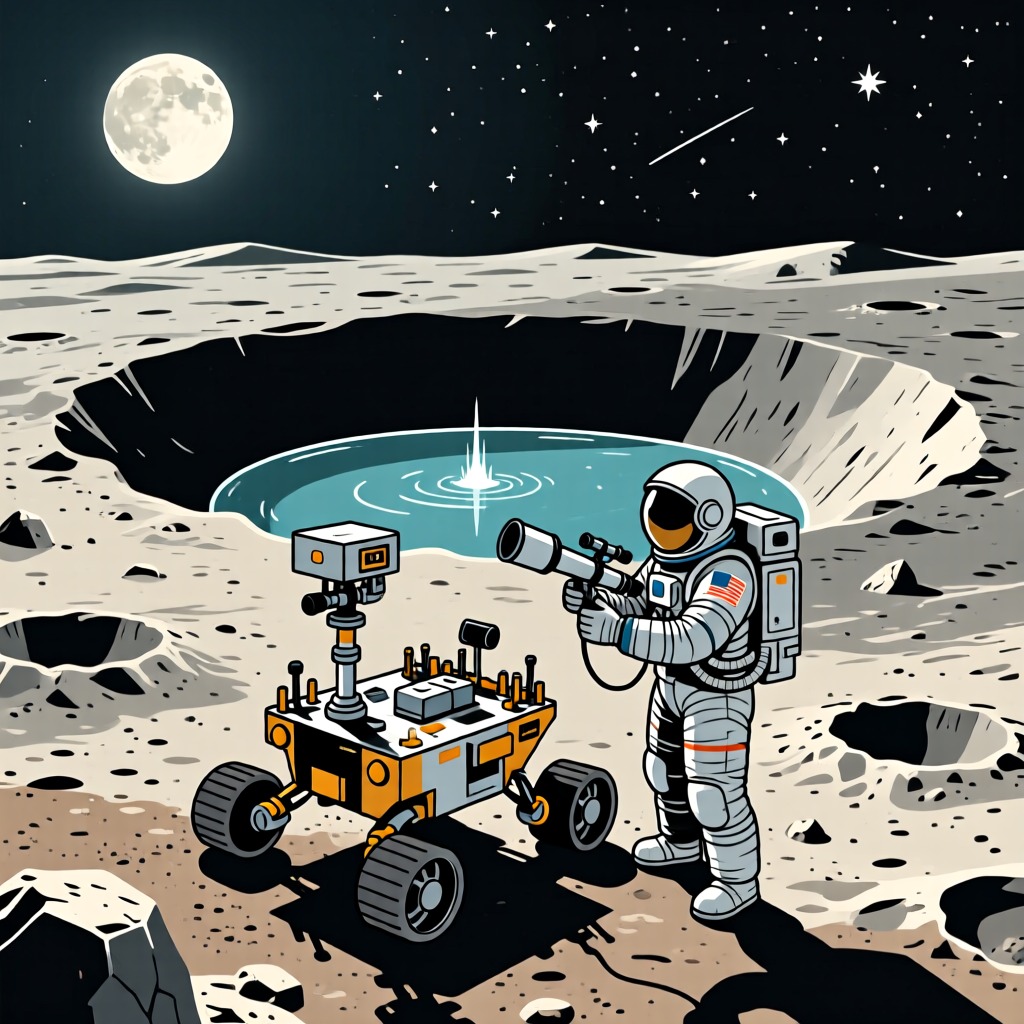

The Moon, as we know it, is a dry world devoid of atmosphere and water, with the "lunar seas" actually being vast plains. However, some scientists challenge this notion, suggesting that the Moon may have experienced volcanic activity that released large amounts of water vapor during eruptions. On the other hand, there are scientists who believe that the "lunar seas" and highlands were formed by lava flows, indicating that any water present may have long since evaporated. Samples brought back by the Apollo missions confirmed the latter view, revealing that the soil and rocks on the Moon's surface are extremely dry and have never been subjected to water erosion.
Is it possible that there are other sources of water on the Moon? Theoretically, yes. In 1961, some scientists proposed that comets and asteroids, over the course of eons, may have delivered water to the Moon, which could be stored in the form of ice within the craters at the Moon's poles.