
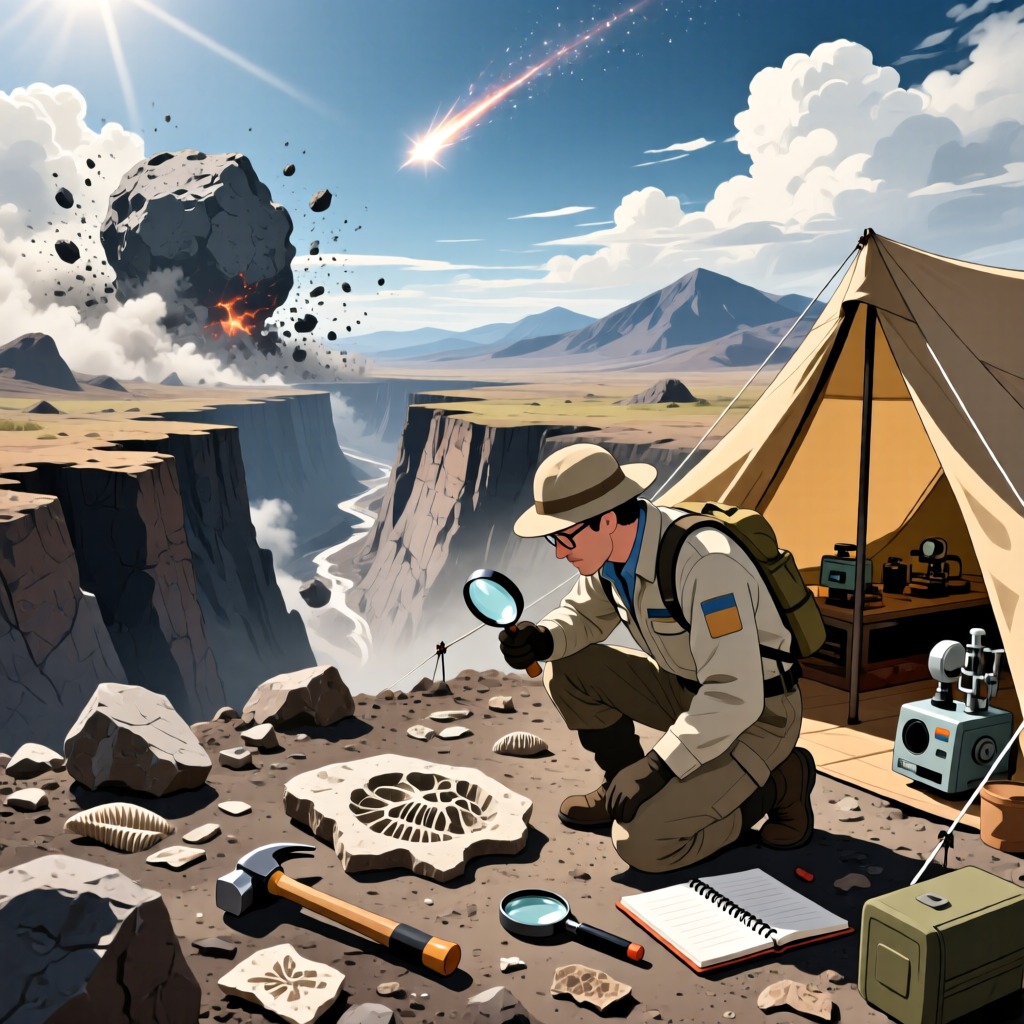

Sixty-five million years ago, an asteroid impact dramatically altered the fate of Earth. This asteroid was far larger than the collision of a comet with Jupiter, and its catastrophic consequences nearly led to a mass extinction of life on Earth. Not only did the dinosaurs become extinct, but also various reptiles such as pterosaurs, mosasaurs, and ichthyosaurs, along with marine invertebrates like ammonites and belemnites. The number of biological genera plummeted from 2,868 to 1,502, with an extinction rate of 75%, marking one of the largest mass extinction events in Earth's history.
Geological changes followed suit. The Earth's crust was violently impacted by the asteroid, disrupting its equilibrium. The forces acting on different points of the crust became unequal, forcing the Earth to readjust. Mountain-building and tectonic activities ensued, giving rise to many of today's mountain ranges. For example, the Andes, the highest mountain range in the Americas, was formed during this mountain-building period.
The climate also underwent severe changes. In an era without large mountains and plateaus, the global climate was mild and humid, supporting a rich diversity of life. However, with the rise of mountains and plateaus, the climate became extreme, leading to vast areas of arid and semi-arid regions. This climatic shift prompted changes in biological distribution, fostering the evolution of mammals and birds that were better adapted to harsh environments. The ancestors of primates emerged during this period of disaster. Clearly, the deterioration of the environment accelerated the evolutionary process of life.
Scientists believe that cosmic collisions are closely linked to significant events in Earth's history, triggering environmental catastrophes that led to mass extinctions while also creating conditions for further evolution of life. Life evolves through the continuous cycle of disappearance and rebirth, with each catastrophe serving as a crucial turning point in the long history of Earth.