
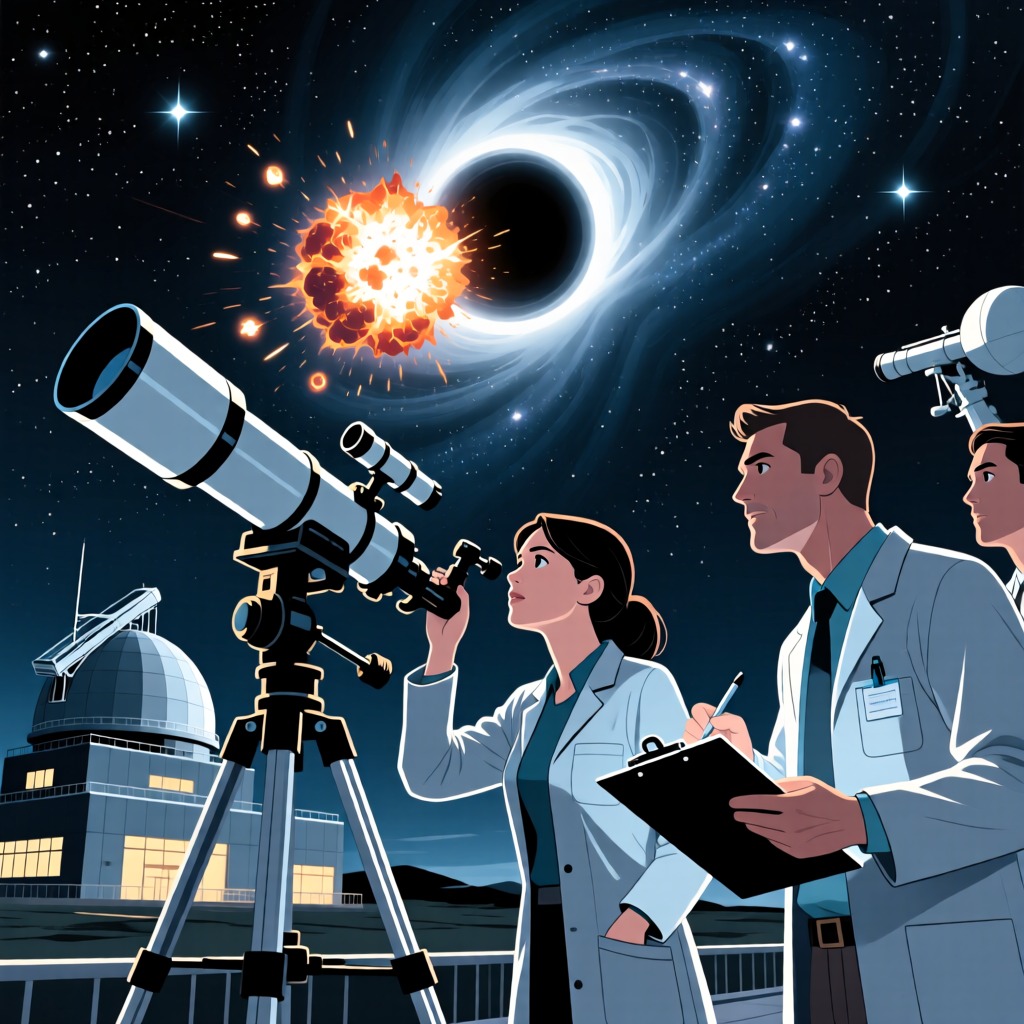

Astronomers have discovered that disasters on Earth may be linked to the positions of planets in our solar system, and are closely related to the cosmic phenomena of black holes and white holes. Every four years, black holes accumulate massive amounts of energy, coinciding with leap year cycles, which can have adverse effects on Earth. Conversely, white holes can mitigate these impacts and even introduce beneficial factors. The situation is most favorable when energy distribution is balanced between black holes and white holes.
In 1988, observational data indicated that energy accumulation occurred in certain white holes, signaling an increased risk of war on Earth and a rise in mortality rates. However, when energy distribution approaches a white hole, these dangers can be alleviated. Additionally, on March 5, 1979, nine artificial satellites simultaneously detected a massive explosion from a neutron star in the Large Magellanic Cloud, releasing energy equivalent to 3,000 years' worth of the Sun's output. If such an event were to occur within the Milky Way, Earth would face catastrophic disaster. This reveals that humanity is constantly under threat from the cosmos, and conquering the universe while battling fate will be a significant challenge for humanity in the 21st century.