
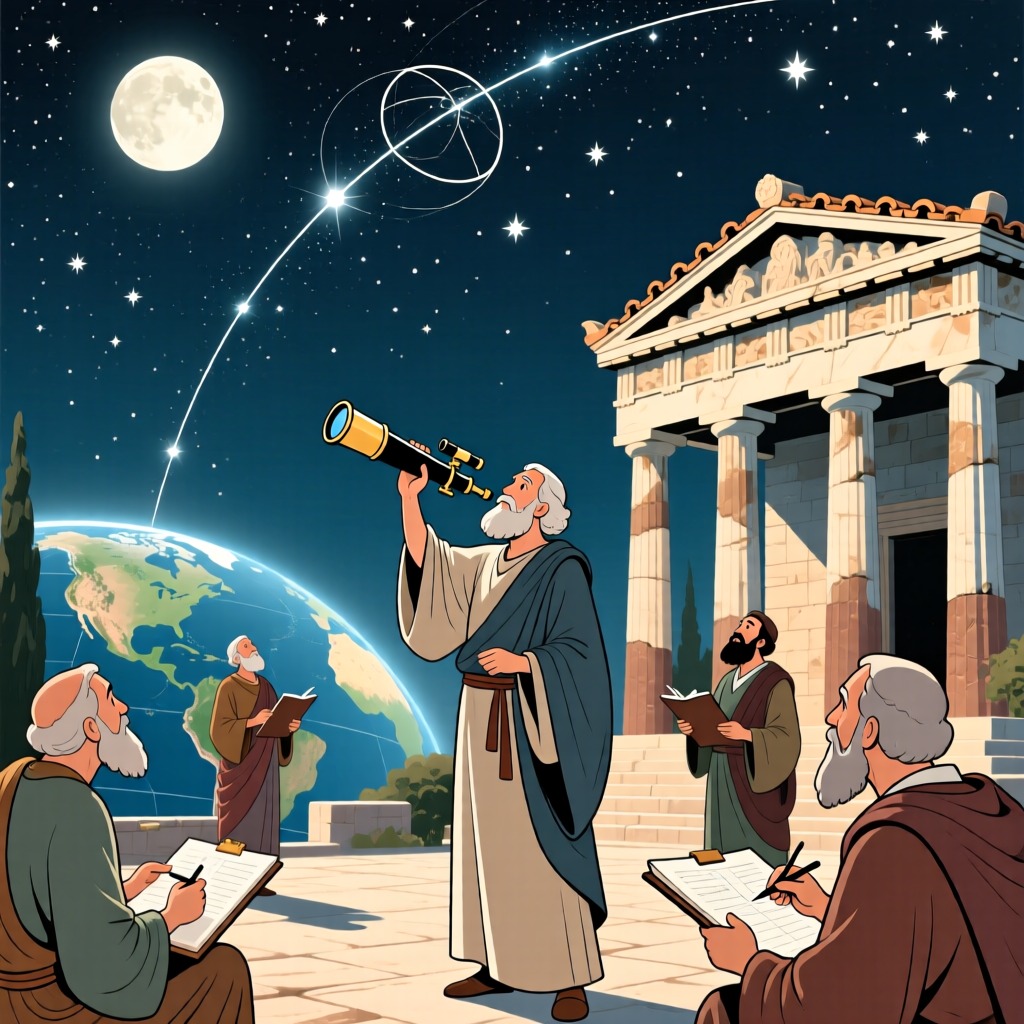

In the vastness of the universe, Earth is like a speck of dust, carrying the miracle of life. Over billions of years, it has attracted and maintained a delicate balance with the Sun, Moon, and other celestial bodies, orbiting the Sun and forming a complex organic network. Earth not only possesses unique rotation and revolution characteristics but also continuously receives energy from the Sun, allowing life to thrive.
The size of Earth is astonishing: with a radius of 6,378 kilometers, its volume is about 1/1,300,000 that of the Sun, and its mass is approximately 1/330,000 of the Sun's. Its rotation speed is incredibly fast, reaching 465 meters per second at the equator, with a rotation period of just 23 hours and 56 minutes. The orbital speed is about 30 kilometers per second, with one complete orbit taking one Earth year, approximately 365 days. Earth's tilted axis causes the Sun to shine directly between 23.5° north and south latitude, resulting in the changing of the seasons. These astronomical phenomena form the foundation of our daily lives, from the seasonal changes of spring, summer, autumn, and winter to the alternation of day and night.
Furthermore, Earth does not exist in isolation. The Sun not only binds Earth through gravity but also provides light and heat. However, other celestial bodies frequently visit Earth. Meteorites, meteor showers, and impacts leave scars on the planet while revealing the close connection between Earth and other parts of the universe. For instance, the extinction of dinosaurs 65 million years ago was linked to a massive impact event, marking a significant turning point for life on Earth.
Every phenomenon on Earth is not a coincidence but a part of a vast cosmic system. Faced with such mysteries, humanity must contemplate how to better understand and protect this small planet we inhabit.
