
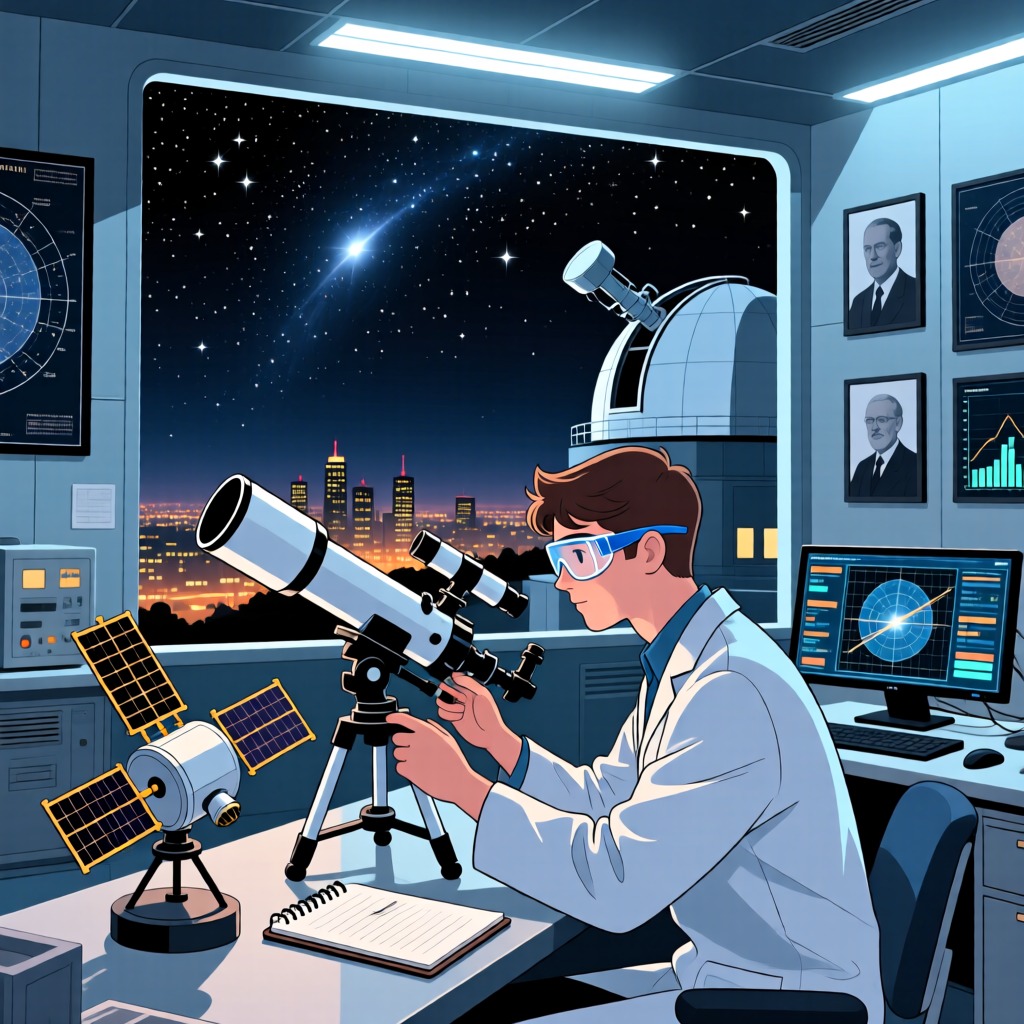

The mystery of the universe's birth has long been a focal point of exploration in both the scientific and philosophical realms. From ancient myths to modern technological advancements, our understanding of the universe has deepened, yet many enigmas remain unsolved. How did the universe come into existence? Will it ever come to an end? This article invites you to explore these profound mysteries of the universe.
Throughout history, humanity's quest to understand the universe has never ceased. Ancient civilizations left behind rich stories about the origins of the cosmos, such as the Chinese tale of Pangu creating the heavens and the earth, and the Greek myth of chaos emerging. However, these narratives are largely based on imagination and fantasy, lacking scientific foundation. It wasn't until the 20th century, with the advancement of astrophysics, that scientists proposed various hypotheses regarding the universe's origin. Among these, the 'Big Bang' theory has gained widespread acceptance. This theory posits that the universe began with a massive explosion from an extremely hot and dense state. Over time, the universe has been expanding, forming the galaxies, stars, and Earth as we know them today.
Scientists continue to strive to verify these theories through observation and experimentation. The Hubble Space Telescope has become a crucial tool in uncovering the mysteries of the universe, helping scientists measure the Hubble constant to infer the universe's age. However, results from different research teams vary significantly, making the age of the universe a highly debated topic. Recent observations suggest that the universe may be only about 12 billion years old, which is younger than Earth.
Additionally, there is an emerging theory known as 'metastable universe theory,' which posits that the universe formed through multiple smaller explosions. This theory challenges the traditional Big Bang concept and proposes a new model for the universe's origin.
The future of the universe is equally filled with uncertainty. If the universe is destined to end at some point, how will it disappear? Will it collapse into a black hole like a supergiant star, or will it gradually shrink until it vanishes during its expansion? These questions ignite the curiosity and exploratory spirit of countless scientists.