
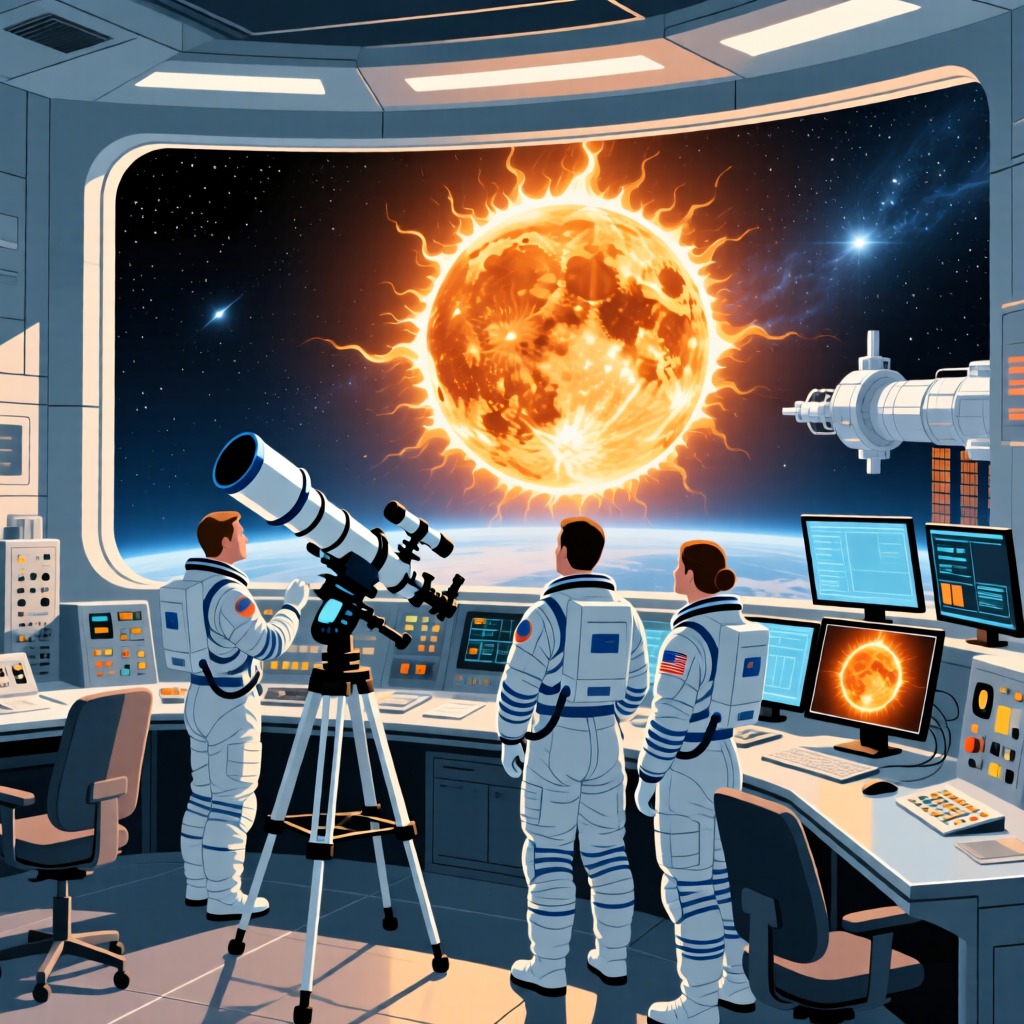

The sun is the cornerstone of our existence, but it will eventually age. What changes will the sun undergo? What does its future hold? The core temperature of the sun reaches between 15 million and 20 million Kelvin, consuming vast amounts of hydrogen every second and converting it into helium, releasing energy in the process. Life on Earth depends on the sun's stable activity. However, the sun will eventually exhaust its hydrogen fuel, expand into a red giant, and ultimately become a white dwarf.
The future of the sun is filled with uncertainty. It will burn hydrogen in the main sequence phase for about 10 billion years, having already lasted for 4.6 billion years. Once the hydrogen is depleted, the sun will expand into a red giant, increasing in size by several tens of times, while its temperature drops, giving it a reddish appearance. After the red giant phase, the sun will shed its outer layers, forming a planetary nebula, leaving behind a white dwarf. A white dwarf is small in size, low in brightness, massive, and has a high density, eventually cooling down and fading away.
The future of the sun is not only a scientific inquiry but also provokes deep reflections on the meaning of life. Billions of years from now, as the sun transforms into a red giant, life on Earth may face extinction. This is not just a scientific exploration but a profound contemplation of the value of life.