
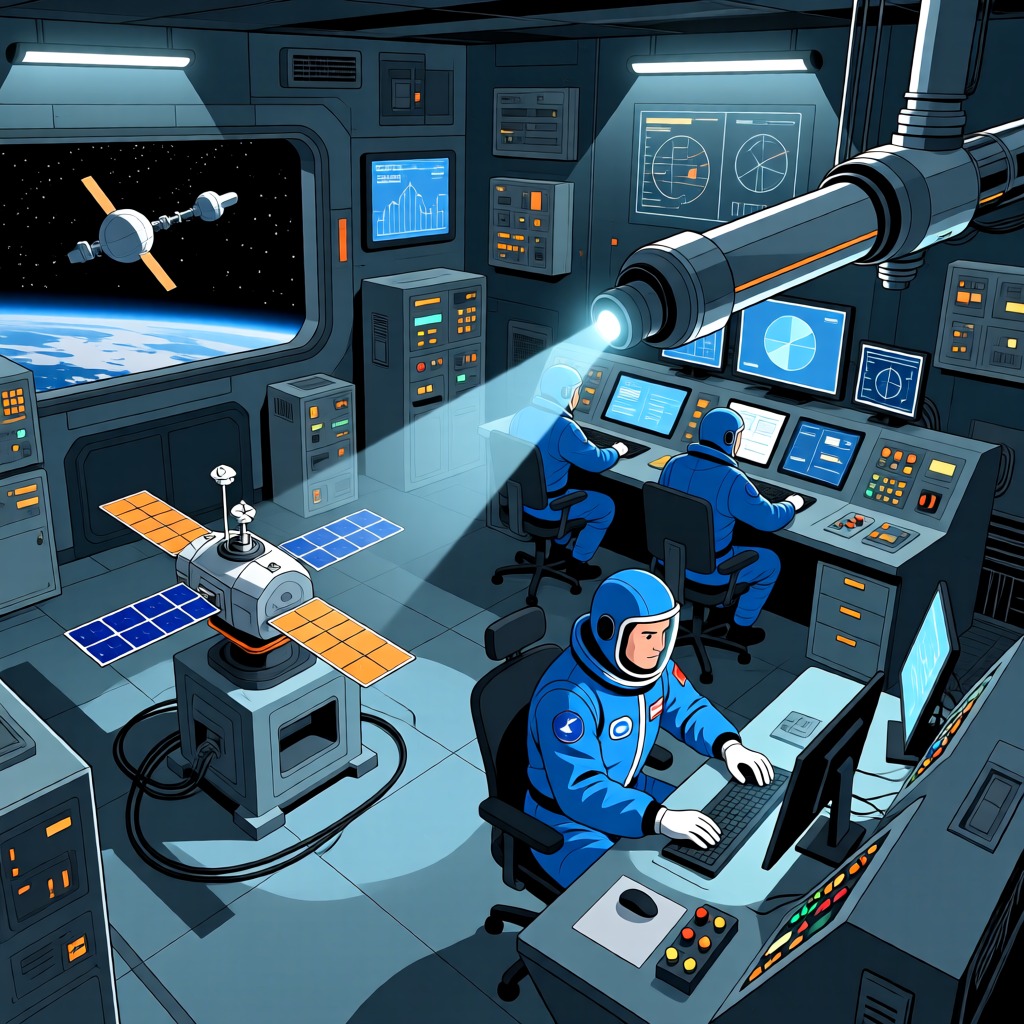

The launch of the first artificial satellite in the 1950s marked the beginning of the space age, but humanity did not foresee that the resulting space debris would become a significant hazard today. Discarded spacecraft, rocket fragments, and other debris float at high speeds in space, posing a serious threat to operational spacecraft. Space junk not only pollutes the space environment but can also deliver fatal blows to critical facilities like the International Space Station.
Since 1957, it is estimated that humanity has generated over 2,000 tons of debris in the space between 800 and 1,500 kilometers above the Earth. American scientists estimate that there are now more than 25,000 pieces of space junk in low Earth orbit. While most of this debris burns up upon re-entering the atmosphere, some remains a persistent threat to functioning spacecraft. Larger debris, such as defunct satellites, are particularly dangerous.
To tackle this challenge, scientists have developed various technological solutions. For instance, the "space sweeper" satellite is a small satellite designed to attach to space debris and push it into the atmosphere for destruction. Additionally, NASA is testing a laser "broom" that aims to reduce the speed of space junk to eliminate threats.
In the face of growing space debris, humanity must adopt more effective measures to protect the space environment. Future technological innovations may help us better manage and eliminate these "space killers."
