

Atlantis, an ancient and mysterious entity, has captivated the world's attention with its enigma of disappearance. Over 2,400 years ago, the ancient Greek philosopher Plato mentioned this mysterious place in his writings—Atlantis.
According to Plato's description, Atlantis was located beyond the "Pillars of Hercules" in the western sea, a prosperous island initially granted to his eldest son, Atlas, by the sea god Poseidon, hence the name Atlantis. In the beginning, the people of this island adhered to a governance of virtue, leading to a rich and peaceful nation.
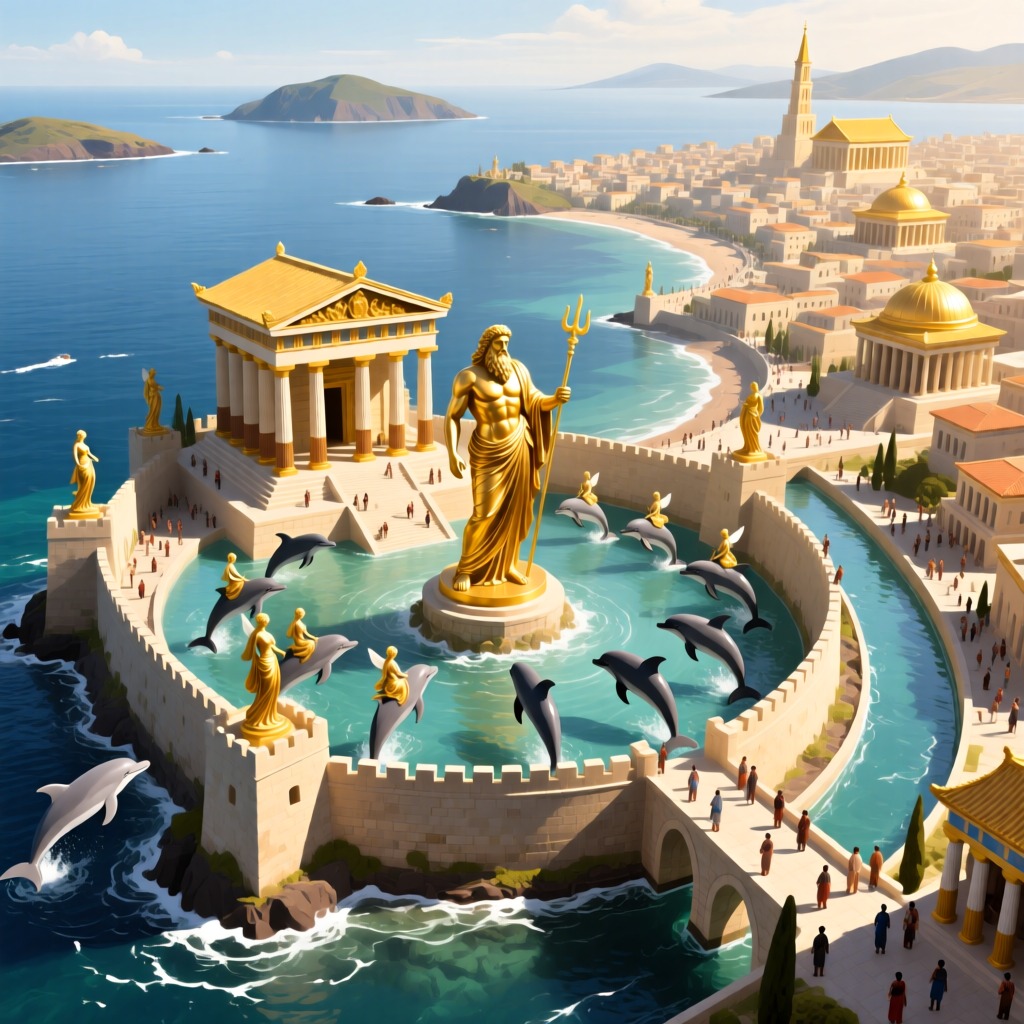
The sacred city of Atlantis, known as the City of Poseidon, symbolizes its grandeur. It was divided into five concentric zones, surrounded by three walls and water channels, providing convenient access to the outside world. The entire city was built with black, white, and red stones, showcasing its magnificence and splendor. The palaces and temples were breathtaking, with silver inlays on the outer walls, golden roofs, and ceilings made entirely of ivory.
In the center of the city stood the Temple of Poseidon, housing a massive gold statue of Poseidon riding a chariot drawn by six golden horses, his head nearly touching the temple's ceiling. Surrounding him were over a hundred sea nymphs riding dolphins, creating a spectacular scene.
However, as material wealth increased, the people began to indulge in pleasure and power struggles. Eventually, the Atlanteans waged wars, angering Zeus, the king of the gods. Overnight, a volcanic eruption and floods submerged the entire Atlantis, causing it to vanish from history.
