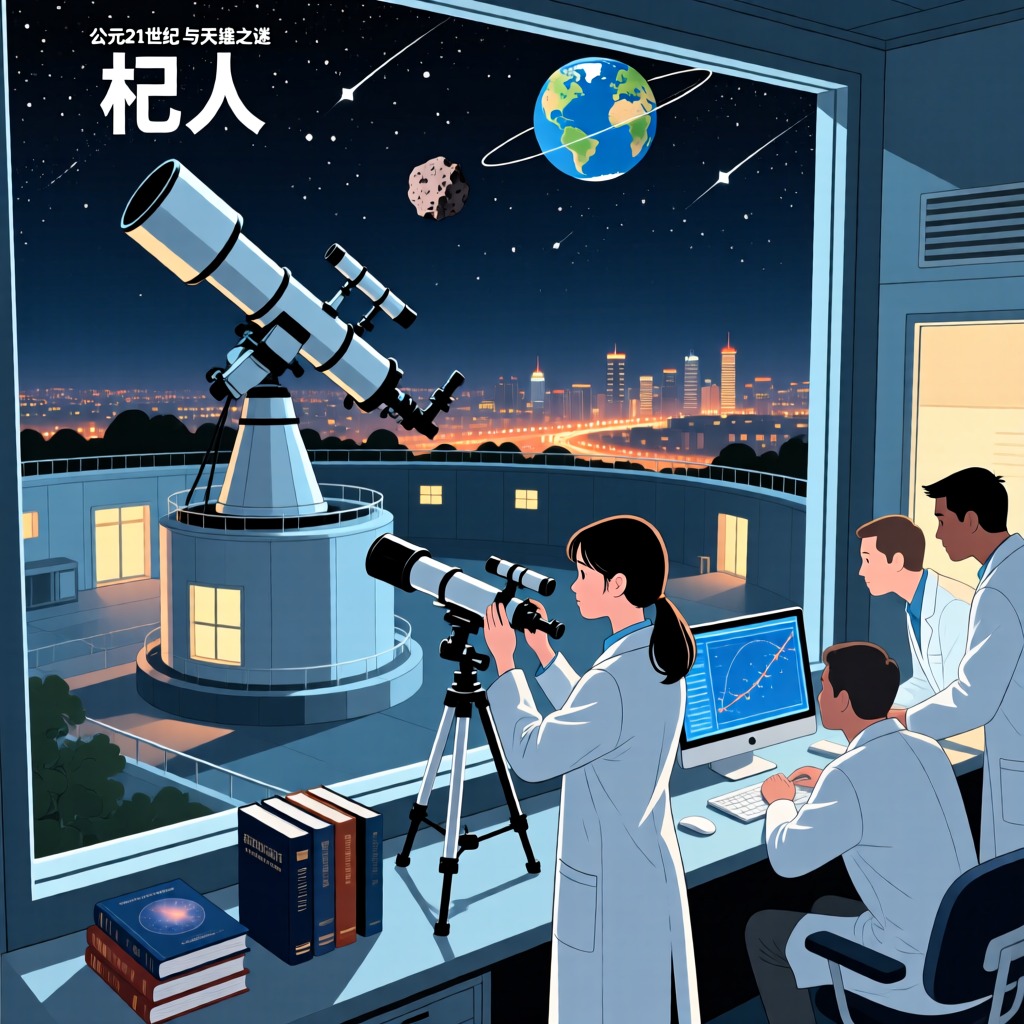
In ancient times, people worried that the sun, moon, and stars might fall from the sky, and the story of the 'Qi People' has been passed down through generations. Today, we face not only the celestial bodies but also threats from deep space—asteroids and comets. The potential dangers posed by these celestial objects compel humanity to reassess the validity of the 'Qi People' concerns.
The history of catastrophic collisions, such as the one between Jupiter and a comet, warns us of the possibility that Earth could face similar disasters. If such an event were to occur, would humanity be able to cope? These questions have sparked in-depth discussions among scientists. While the vast majority of asteroids are concentrated in the asteroid belt, a few 'intruders' could pose a threat to Earth. For instance, the Hekates asteroid and the Hermes asteroid have come close to Earth, causing significant alarm.
Modern astronomers have observed and calculated that asteroids larger than 1 kilometer and comets over 600 meters in diameter pose potential threats. Although the probability of these celestial bodies impacting Earth each year is extremely low, the consequences would be unimaginable if it were to happen. Therefore, scientists are calling for enhanced monitoring and early warning systems to take proactive measures to protect Earth and humanity from incoming small celestial bodies.