
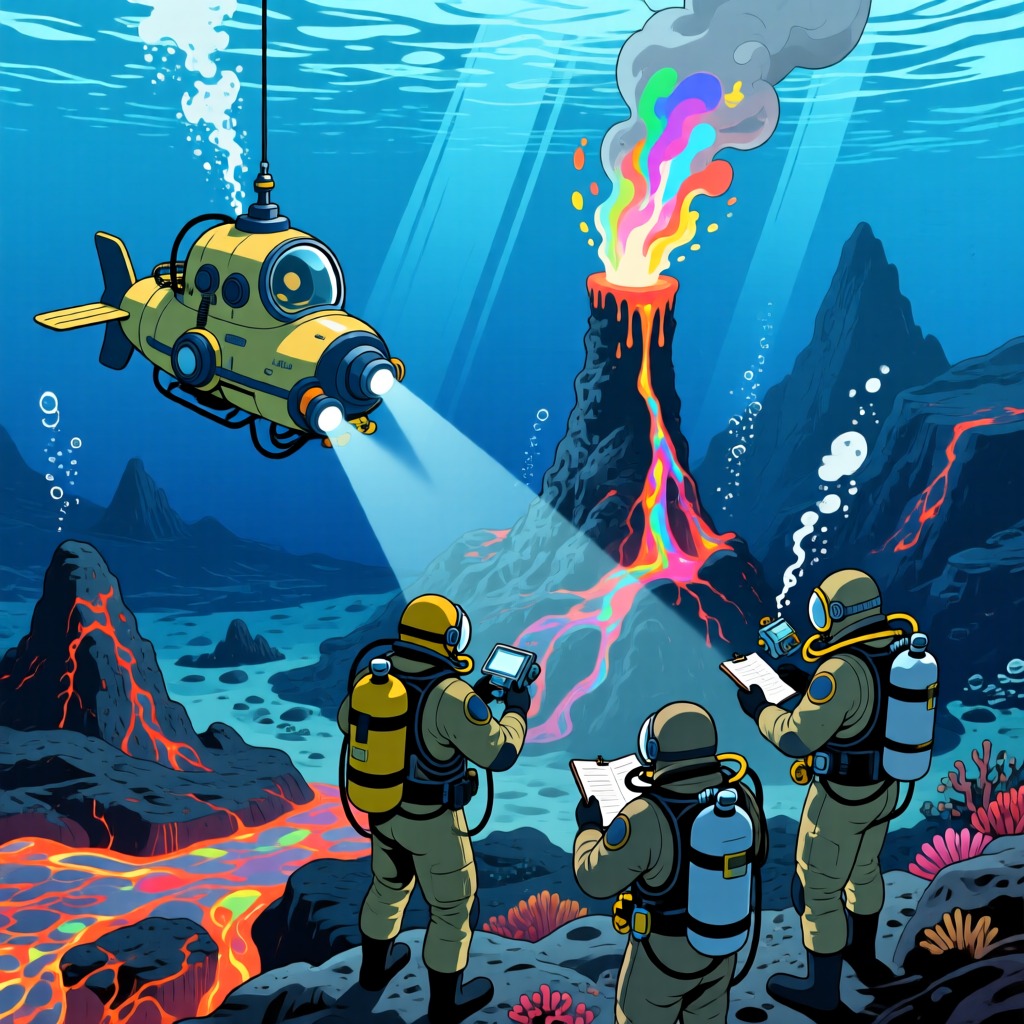

In the 1980s, scientists conducted investigations at the Galapagos Ridge and the East Pacific Rise, discovering a beautiful and wondrous underwater world known as the 'Underwater Rose Garden.' This remarkable place is home to five-meter-long bright red worms, watermelon-sized clams, bowl-like spiders, and palm-sized sand worms. Additionally, they found large 'chimneys' emitting steam and spewing milky fluids, surrounded by solidified volcanic lava, resembling gigantic bouquets.
Measurements revealed that the water here reaches depths of 2,600 to 3,000 meters, with the hot spring water from the 'chimneys' reaching temperatures of 350°C to 400°C and rich in gases like sulfur. The proliferation of sulfur bacteria, combined with unique metallic substances, has created a diverse biological community in this area. In 1977, British geologists first observed the underwater 'chimneys' at the Galapagos Ridge, and in 1979, American scientists returned to discover even more areas of mineral-rich hot springs and gas emissions.
As early as the mid-1960s, similar 'hot holes' were found on the seabed of the Red Sea. Today, multiple 'hot holes' have been identified in the Red Sea, revealing unique fish species and other organisms not found elsewhere in the ocean. These phenomena have sparked new thoughts about the origins of life and the movement of Earth's tectonic plates.