
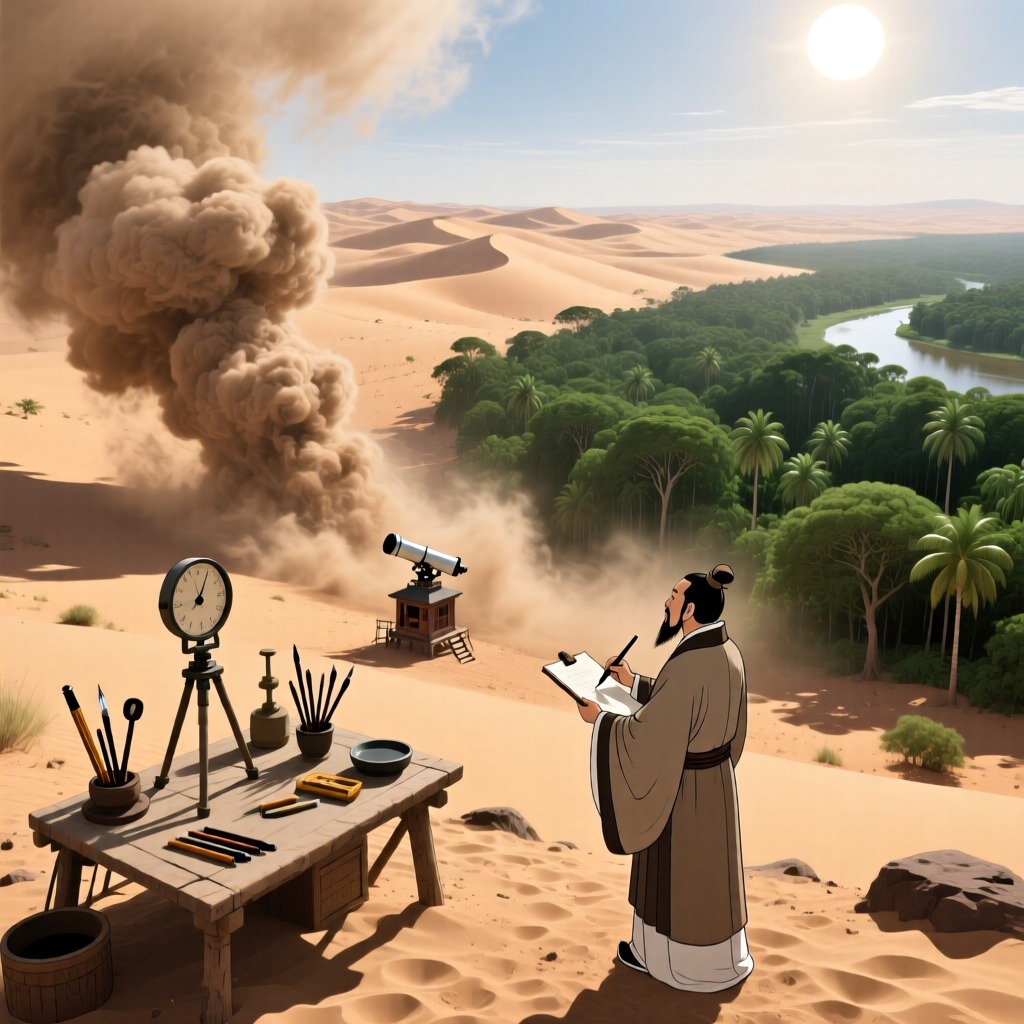

The Amazon River flows through South America, nourishing vast lands and giving rise to the largest tropical rainforest on Earth—the Amazon Rainforest. Despite the complex ecological environment of the Amazon, there is a puzzling phenomenon: this fertile rainforest grows on barren land. So, where do the nutrients necessary for tree growth come from? Some scientists suggest that the Sahara Desert may provide nutrients to the Amazon Rainforest through dust that crosses the Atlantic Ocean.
Research shows that the land in the Amazon River Basin lacks important elements like calcium phosphate, resulting in poor soil quality. However, every year, a significant amount of dust from the Sahara Desert drifts across the ocean, bringing valuable nutrients to the rainforest. This dust is not only rich in phosphorus and calcium but also carries other essential minerals that nourish the plants within the rainforest.
NASA has tracked these dust particles using meteorological satellites and special aircraft, discovering that they primarily originate from the Sahara Desert and the semi-arid Sahel region to its south. Driven by the easterly trade winds in low-latitude regions, this dust crosses the Atlantic and eventually reaches the Amazon River Basin. Each hectare of land can receive about 1.1 kilograms of calcium phosphate annually, which is sufficient to support the growth of the rainforest.
This phenomenon reveals the wonders of nature and showcases the interconnectedness of ecosystems across different continents.