
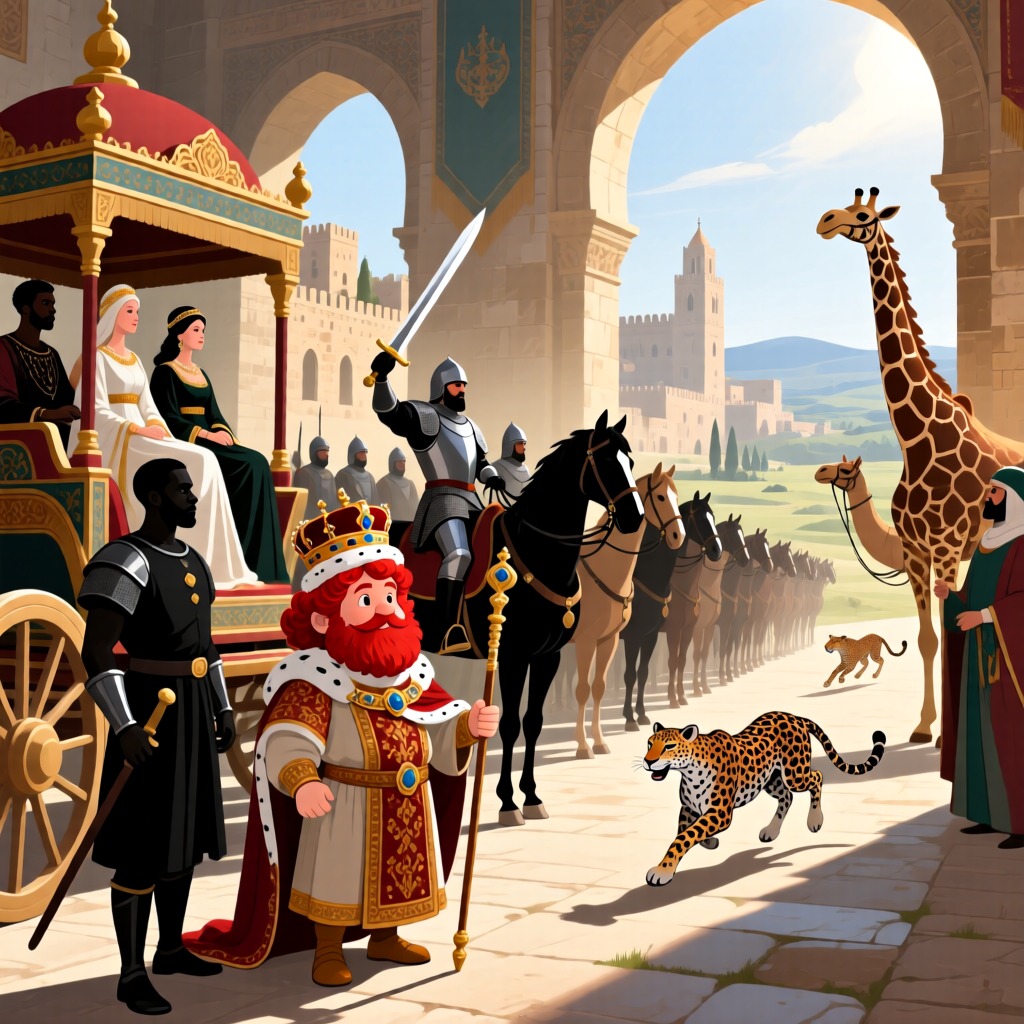

Frederick II is one of the most striking monarchs of the Middle Ages, known for his astonishing procession. Leading the way were the Saracen cavalry, riding Arabian horses and dressed in Eastern attire. The emperor's concubines were carried in tall palanquins, guarded by Black attendants. Courtiers and knights followed closely behind, while the emperor himself, short in stature with bright red hair, exuded an air of authority. Following them were various exotic animals, including leopards and cheetahs, as well as the first camels and giraffes to appear in Europe. These sights left the Italians and Germans of the time in awe.
Frederick II held titles as the King of Sicily, Holy Roman Emperor, and King of Jerusalem and Cyprus, and was regarded by his subjects as a remarkable figure. However, he also faced fierce criticism from the Pope. His dramatic meeting with Saint Francis of Assisi highlighted his open attitude towards religion. He employed Jewish physicians and Arab soldiers, attempting to blend the wisdom of different cultures. Frederick's court attracted many poets and artists, and he was a talented poet himself, influencing Dante. His legal system and architectural style foreshadowed the coming of the Renaissance, but his long-standing conflicts with the Pope ultimately led to a tragic end.
Frederick II was not only a politician but also a scientist. He authored a work on the ecology of birds titled "The Art of Falconry," which meticulously documented the habits and hunting techniques of falcons. This book is not only a scientific treatise but also an artistic work, showcasing Frederick's profound understanding of the natural world.