
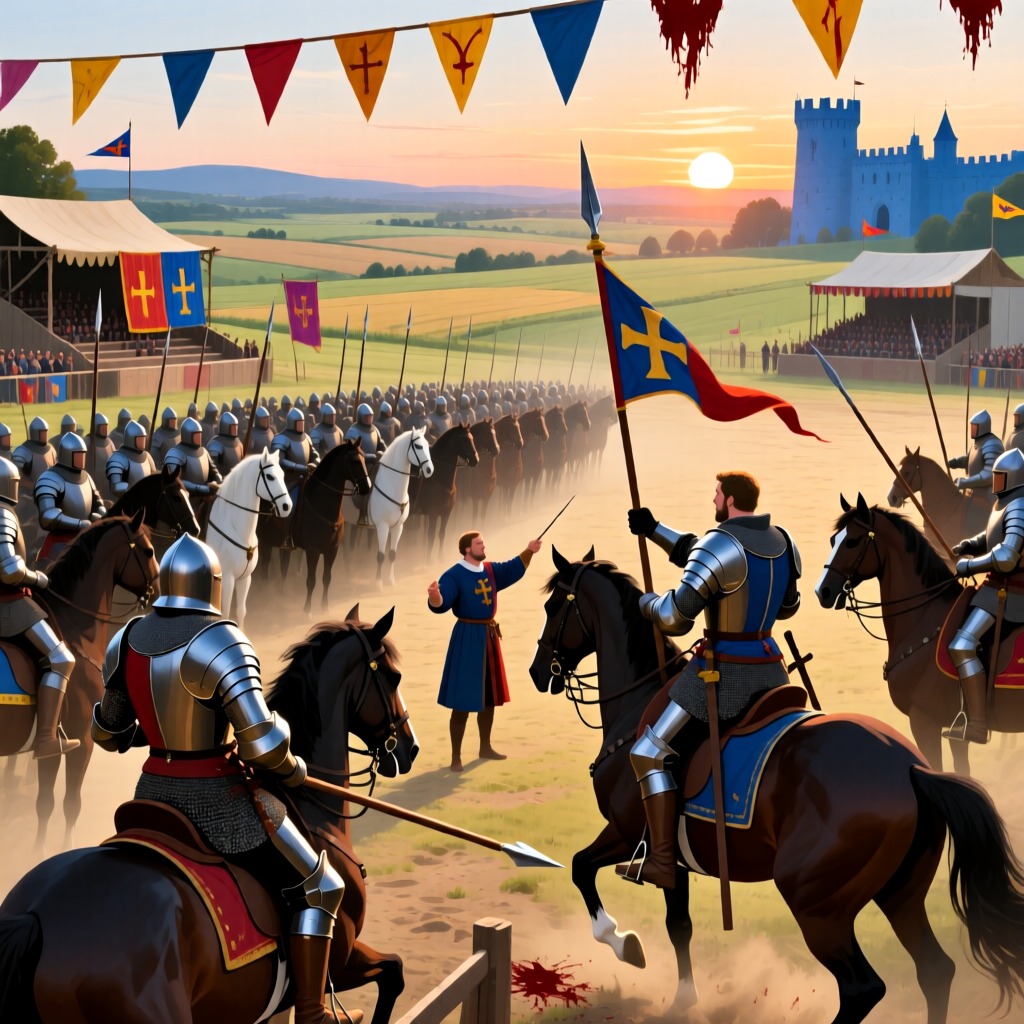

On a fateful evening in 1180, outside the town of Blagny by the Marne River in France, a brutal jousting tournament was unfolding. Thousands of fully armored knights charged at each other, creating a breathtaking spectacle. They wielded lances and attacked one another, leaving the ground littered with broken weapons and the air thick with the scent of blood. This tournament was not merely entertainment; it was a crucial occasion for knights to showcase their skills and compete for honor.
Despite repeated condemnations from the Church, such tournaments remained popular. They served not only as a means of training for the knights but also as opportunities for them to rise in status. Young squires would begin their journey serving knights, gradually becoming wandering knights themselves, and potentially rising to become powerful nobles. The competitions were not limited to knights; even squires participated, making jousting tournaments a unique social phenomenon.
As time progressed, the format of jousting evolved. By the late 14th century, jousting became more personalized, with knights donning heavy armor and engaging in one-on-one combat. This shift made the tournaments more thrilling but also more perilous. Nevertheless, these events remained immensely popular, becoming an integral part of medieval life.
Marshal, a renowned English knight of the 12th century, was famous for his bravery and martial prowess. He rose from being a squire to a powerful noble, enduring countless jousting tournaments along the way. His legendary tale epitomizes the spirit of that era.