
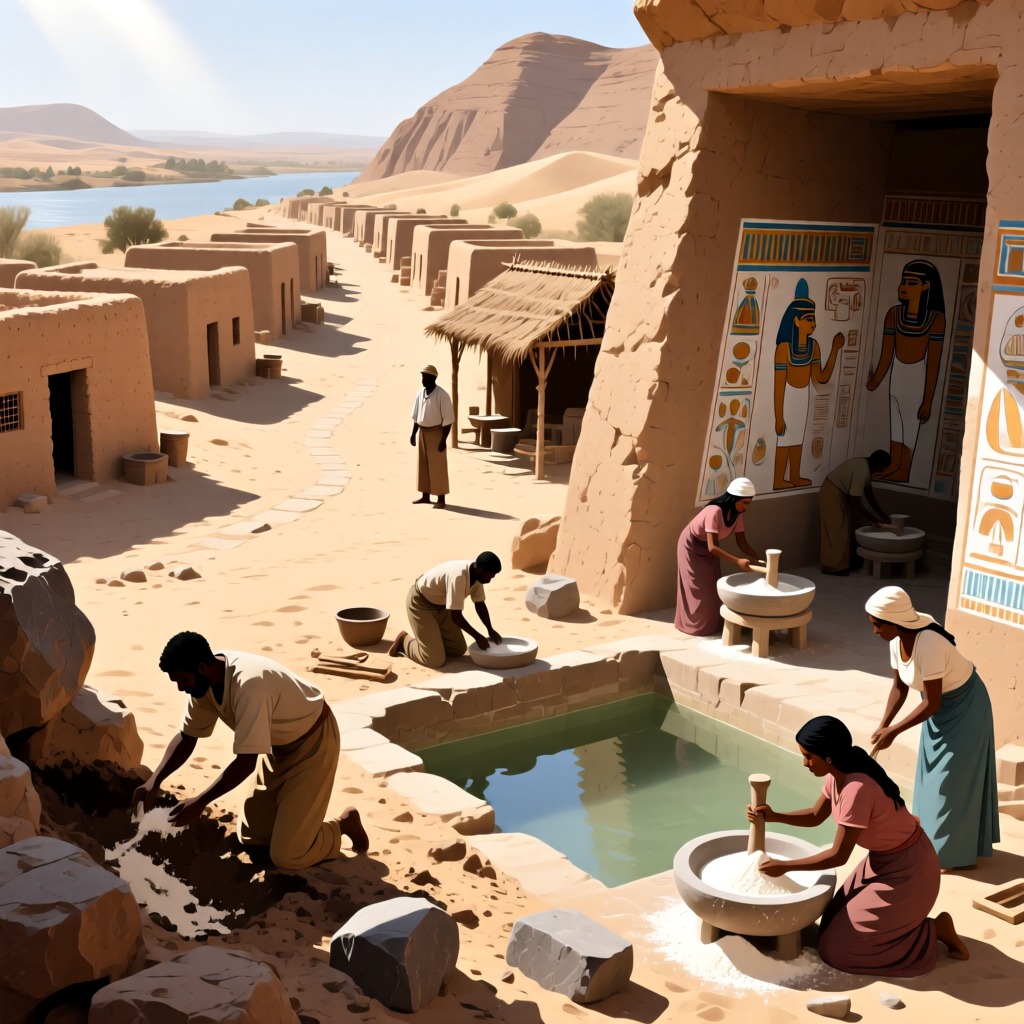

About 3,500 years ago, Egyptian Pharaoh Semerkhet decided to construct an underground tomb for himself instead of a grand pyramid. This tomb is located in the Valley of the Kings on the west bank of the Nile, far from the eyes of tomb robbers. For the next five centuries, all the pharaohs of the New Kingdom chose to rest here. However, these tombs were not built by slaves, but by hired professional craftsmen. They were responsible not only for excavating the rock but also for decorating the interiors of the tombs. These craftsmen lived in a village called Deir el-Medina, located on the edge of the desert. Despite the harsh living conditions, their lives were relatively stable.
The work of the craftsmen was incredibly meticulous; they needed to drill into hard rock, carving out winding passages and hidden chambers. Although the work was strenuous, the craftsmen enjoyed an eight-day work week followed by two days off to reunite with their families. Their wages were paid in kind, including wheat, barley, fish, and vegetables. To prevent workers from slacking off, the pharaoh also provided additional benefits such as skin oils and clothing. However, when supplies were delayed, the craftsmen would take action; during one strike, they entered the mortuary temple of Ramses II, demanding enough food or they would refuse to return to work. Ultimately, the official scribe ordered a month's worth of food to be allocated to them, ensuring the basic needs of the workers were met.
Through these details, we can see that the craftsmen of ancient Egypt were not the slaves they are often thought to be, but rather hired professionals who built eternal resting places for the pharaohs, ensuring that they too could embark on the path to the afterlife.