
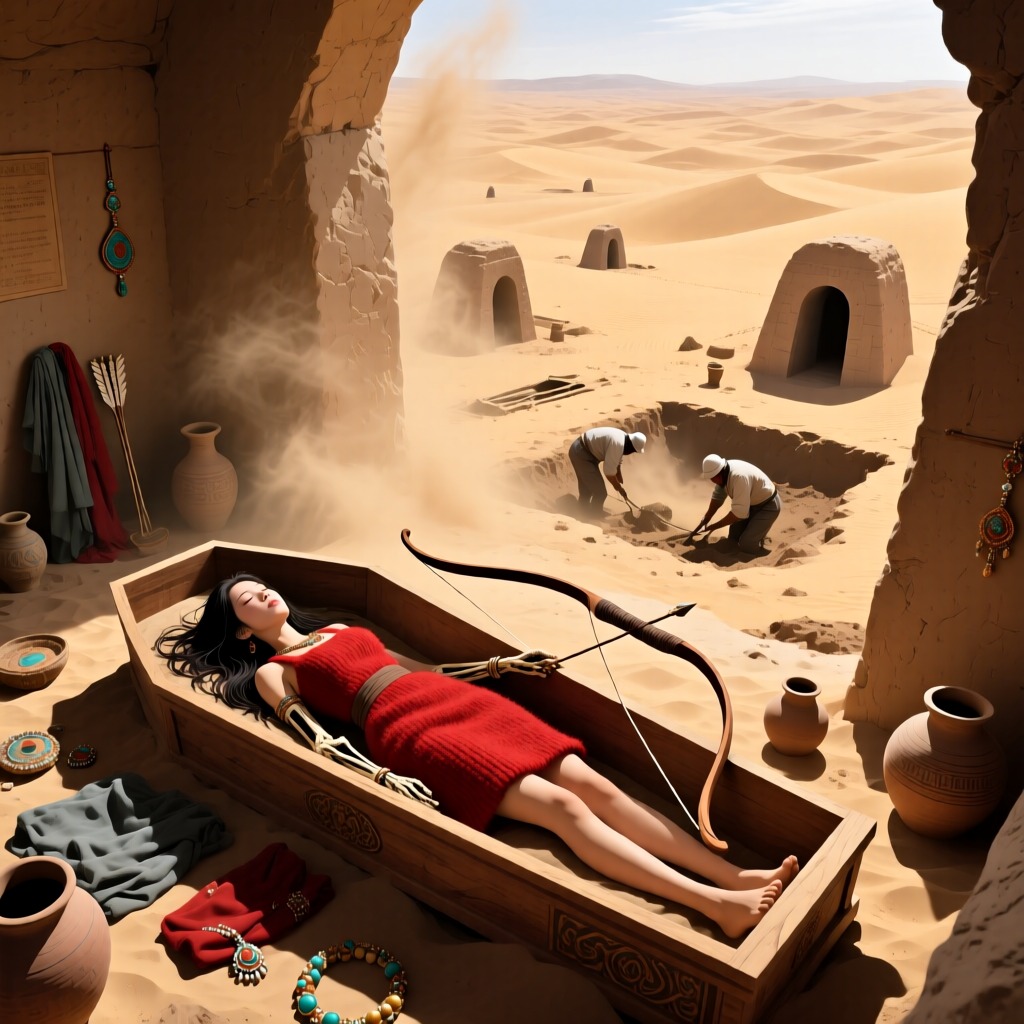

In ancient times, people had unique beliefs and methods for preserving corpses. At the Niya site in Xinjiang, archaeologists discovered a remarkable natural phenomenon—mummies. These mummies were not treated with any preservatives but formed naturally, revealing the ancient people's distinct understanding of life and death.
The mummies unearthed at the Niya site vary in their state of preservation; some are intact, while others have completely decayed, leaving only bones and black hair. In Tomb No. 1, excavated in 1959, a couple had turned into mummies. Despite their shriveled bodies, their hair and clothing remained well-preserved. During the 1993 excavation, a well-preserved "Red-Clothed Girl" was also found. These mummies not only reflect the lifestyles of ancient people but also highlight the unique natural environment of the Niya region that influenced corpse preservation.
The climate in the Niya region is exceptionally dry, which causes corpses to dehydrate rapidly under the effects of strong winds, intense sunlight, and high temperatures, ultimately becoming mummies. This arid climate not only preserved the corpses but also protected other artifacts. However, the preservation of corpses is not entirely uniform and is influenced by rainfall. In dry years, corpses are more likely to dehydrate into mummies, while in wet years, they tend to decay. Additionally, variations in human body water content can also affect preservation outcomes. These factors collectively contribute to the diversity of mummies found at the Niya site.
The mummies of Niya are not just archaeological wonders; they are also profound testimonies of ancient human lifestyles and their relationship with the natural environment.