
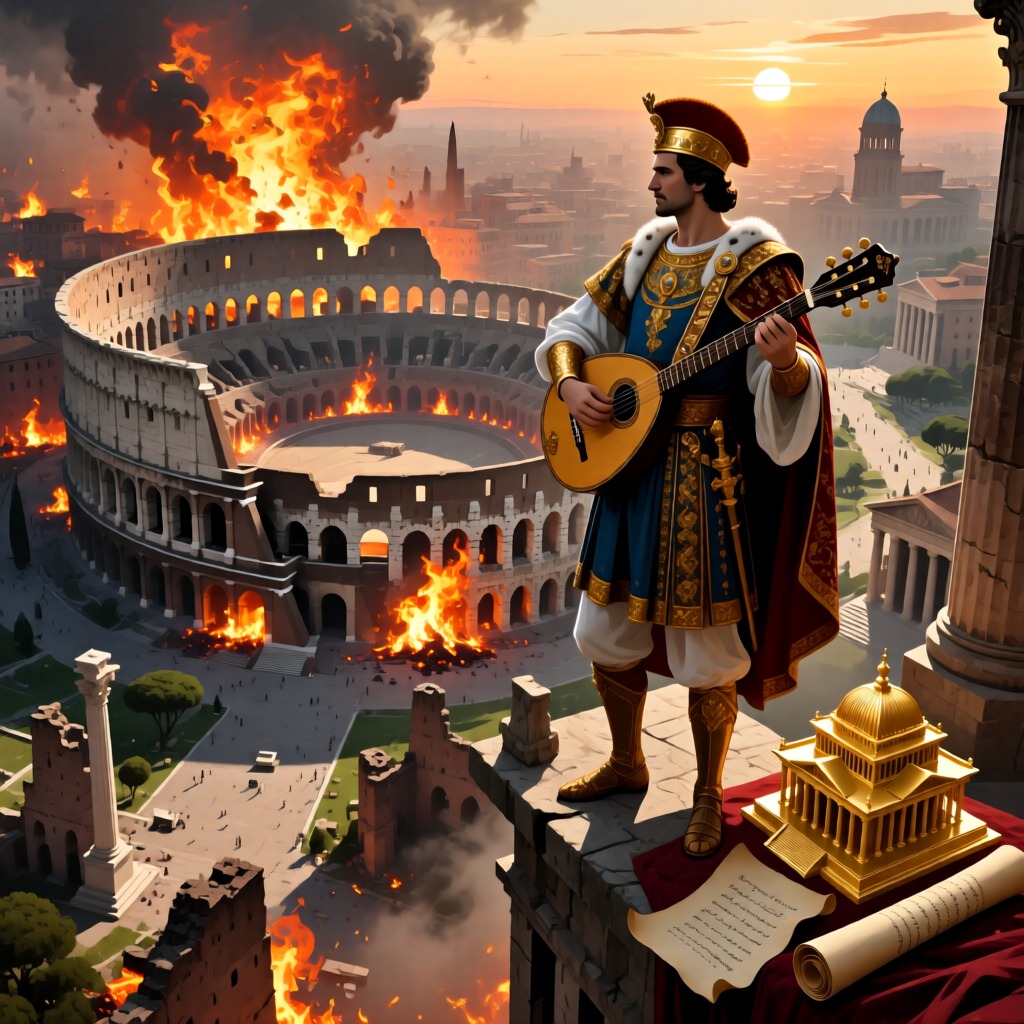

In the 1st century, Rome was the heart of Europe, but on a summer day in 64 AD, a sudden great fire reduced the city to ruins. Nero's name has always been linked to the mastermind behind this disaster. Known for his brutality, Nero's reign saw the splendor of Rome gradually consumed by luxury and corruption. It is said that not only did Nero fail to take measures to extinguish the fire, but he may have also set it himself as an excuse to rebuild a new palace. However, historians remain divided on whether he actually ordered the fire. His actions indeed intensified public discontent, as he scapegoated Christians to divert attention. But the truth remains an unsolved mystery to this day.
The scene of Nero setting the fire and rebuilding the "Golden House" is both tragic and ironic. He stood on his stage, witnessing the city burn, yet remained engrossed in music and poetry. Such behavior reveals not only his cold-heartedness but also his desire for power and luxury. The intertwining of Rome's glory and decline serves as a poignant reminder of the impermanence of history.