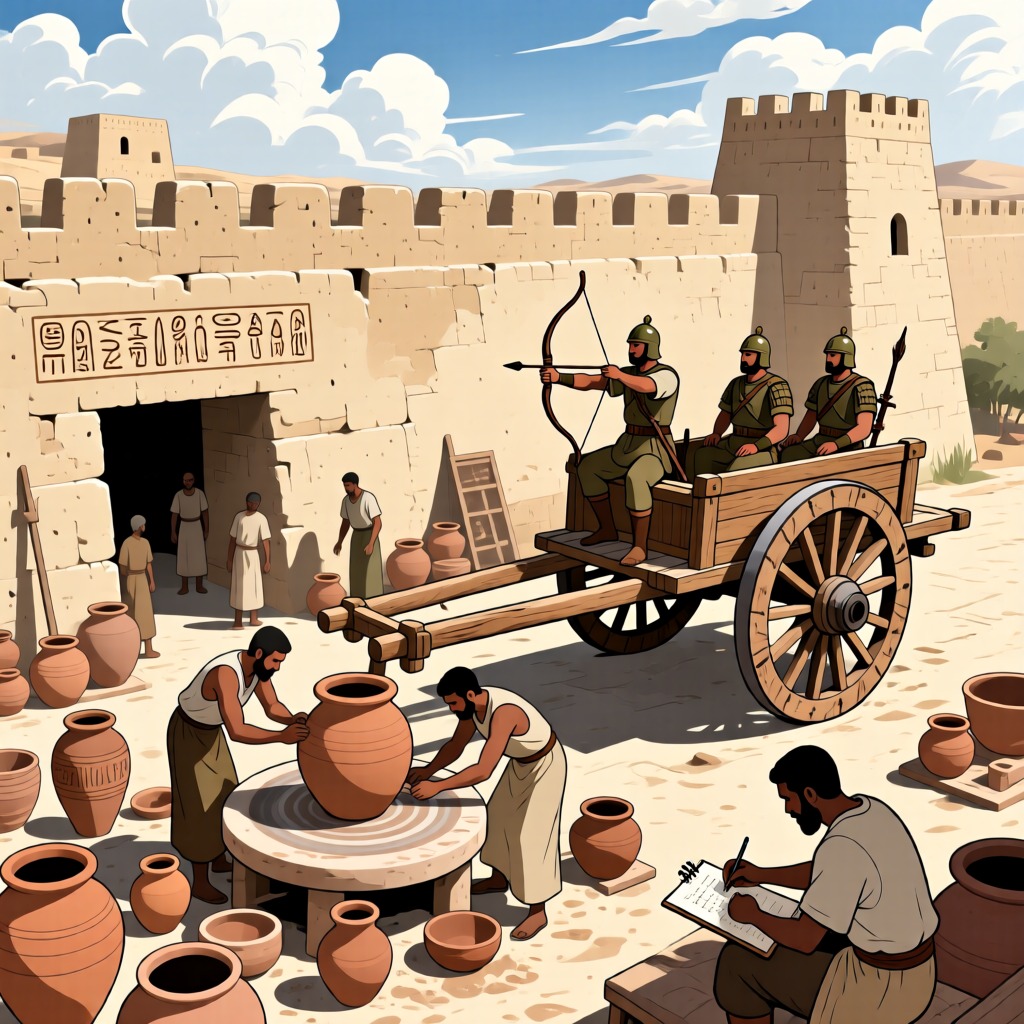
The wheel of Mesopotamia, a seemingly simple disk, fundamentally changed the way humans live. Approximately 5,500 years ago, potters began using the wheel to create pottery, which not only simplified the crafting process but also increased work efficiency. As wheel technology spread, the potter's wheel gradually evolved, and by 3250 BC, small holes appeared on the wheel, making operation even more convenient. The invention of the wheel was not just an advancement in pottery but also a catalyst for societal development as a whole. However, the exact time and place of the earliest application of the wheel in transportation remains a mystery. While some believe it originated in Mesopotamia, others argue it came from the arid steppes of Central Asia. Regardless, the invention of the wheel undoubtedly laid the foundation for the later era of mechanical manufacturing, as almost all products and tools in modern society rely on the wheel's function. Furthermore, the spread of the wheel facilitated road construction and commercial development, completely transforming human travel.
The Mystery of the Wheel in Mesopotamia