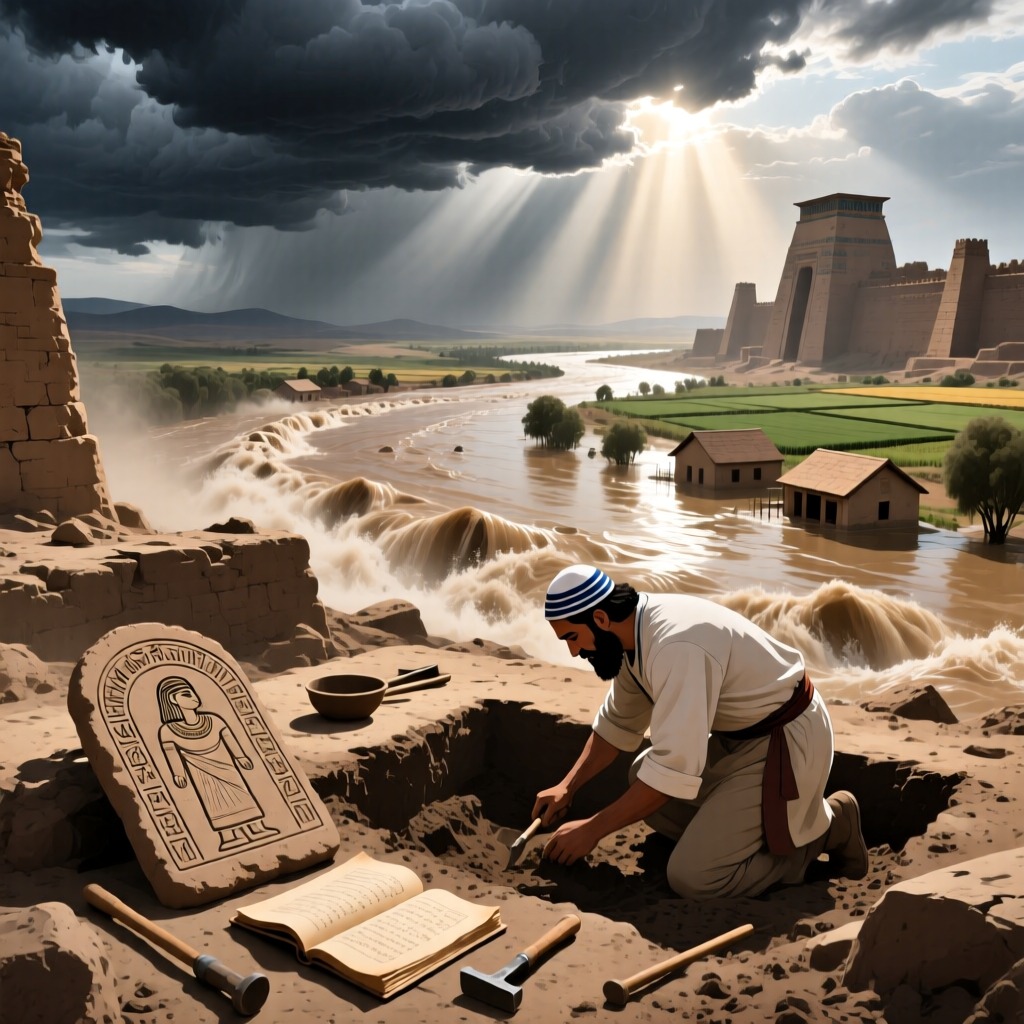
The ancient Jewish legends are recorded in the Book of Genesis in the Old Testament: God decided to destroy the world with a flood due to humanity's corruption, but Noah followed God's command to build an ark, saving his family and various animals. This story is well-known in Western Europe. In the late 19th century, scholar George Smith proposed that this legend resembles the flood myths of the ancient Mesopotamian region, a viewpoint supported by the Sumerian tablets of the Epic of Gilgamesh. This sparked a debate about the origins of the ancient great flood and its associated legends.
The core of the debate revolves around two key questions: Did a great flood actually occur in ancient times? And how did these flood myths originate? Different scholars have put forth three main theories. One perspective argues that the global flood is purely fictional, originating from Sumerian legends, with archaeological findings supporting this view. Another perspective suggests that floods caused by melting glaciers did occur, but they did not submerge the entire world, which explains why flood myths exist globally. The third perspective posits that various flood myths do not stem from a single source but may have been triggered by natural disasters such as volcanic eruptions, hurricanes, and heavy rains, with many stories being myths rather than real events.
Each of these three theories has its supporters, providing unique insights into the historical truths behind these ancient legends.