
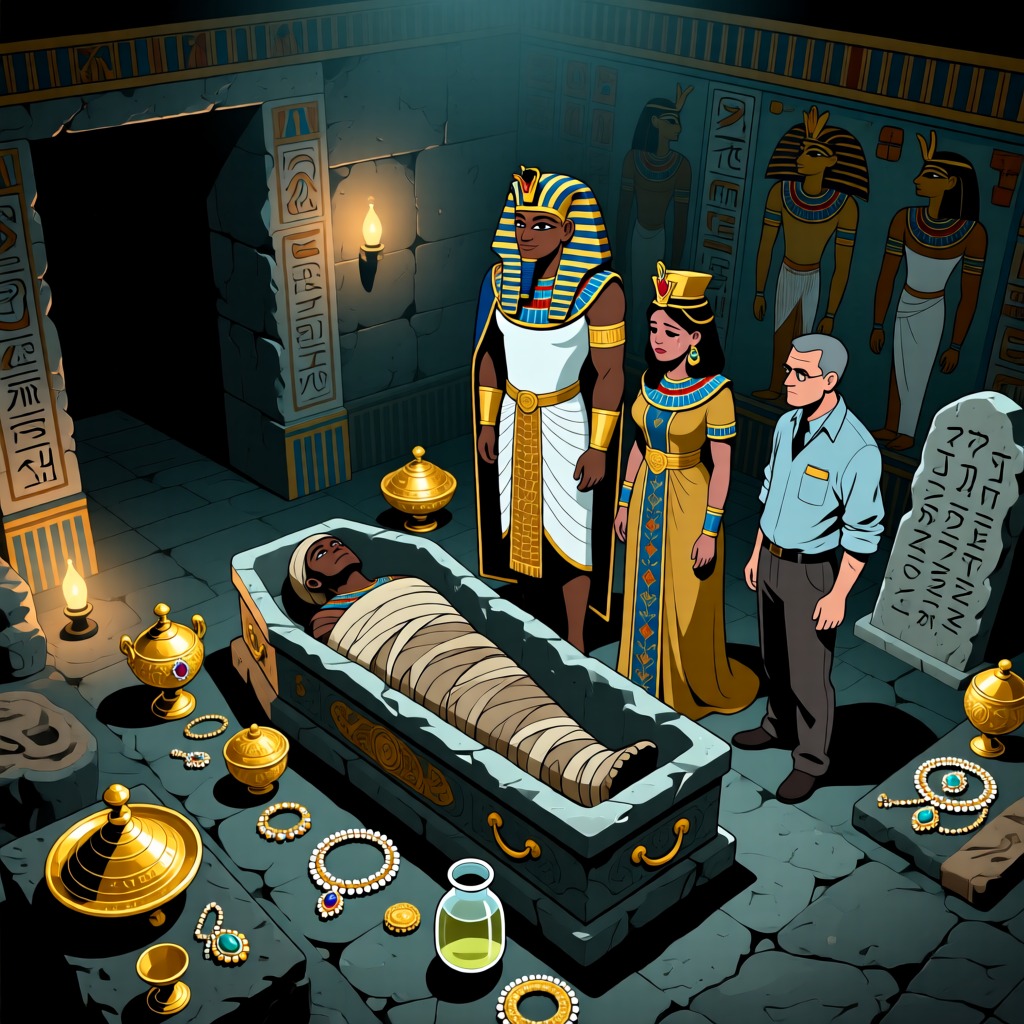

The mystery of ancient Egyptian mummies revolves around the fate of the pharaoh's soul. According to legend, Osiris, the pharaoh of ancient Egypt, not only taught the people skills such as farming and winemaking but also established the identity of the pharaoh in the afterlife. However, his brother Set, consumed by jealousy, ultimately poisoned him. Osiris's wife retrieved his body, mummified it, and eventually, Osiris's soul ascended to the underworld, becoming the pharaoh of the afterlife.
The process of mummification was incredibly complex, involving dissection, soaking in preservatives, filling with spices, applying resin, and wrapping in cloth. This intricate procedure not only showcases the wisdom of the ancient Egyptians but also reflects their beliefs about the afterlife.
However, advancements in modern science have led to significant breakthroughs in preservation techniques. Cryogenic freezing technology can not only preserve life but also allow cells to regain vitality. In 1963, American scientists confirmed that the skin cells of Egyptian princess Meni were still viable, suggesting that there may be a possibility of awakening her in the future.
Such technological advancements have sparked a reevaluation of ancient Egyptian mummies. Archaeologists have discovered tombs that had never been robbed, which surprisingly contained no mummies. Moreover, mummies preserved in cold environments have left people in awe. These findings have ignited curiosity about the beliefs of reincarnation in ancient civilizations.
