

If you're lucky, you might witness the "Green Sun." At sunset, the colors of the light halo at the upper and lower edges of the sun do not mix, with the upper edge displaying a bluish-green hue. These two types of light behave differently as they pass through the atmosphere; blue light is strongly scattered and nearly invisible, while green light can pass through freely. Thus, you see a green sun!
To see the green sun, three conditions must align: timing, location, and the observer's actions. Timing refers to the moment of sunset when the sun's yellow-white light remains relatively unchanged and bright, indicating minimal atmospheric absorption of light. Location means that the observation point should be suitable, ideally on a small hill with a clear horizon in the distance. The observer's actions involve not looking directly at the sun until it is just above the horizon. As the sun approaches its setting point and only a light band remains, one should gaze intently at the sun to enjoy this wonderful moment of green flash, which lasts no more than three seconds but leaves an unforgettable impression.
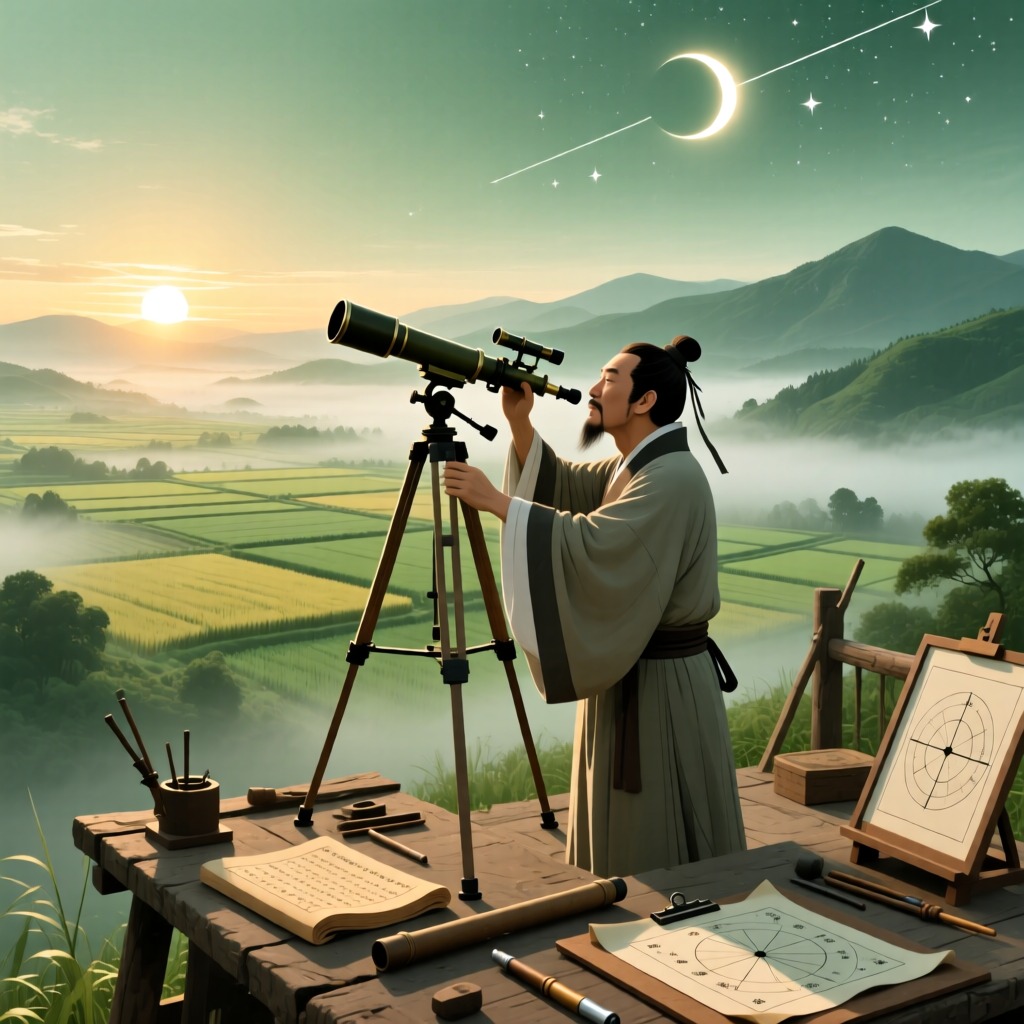
The sun is undoubtedly crucial for all life on Earth. The reverence and awe expressed by ancient peoples reflect the sun's significant role in their lives. From ancient times to the present, humanity's understanding and study of the sun has never ceased. The Greek sun god Apollo, the Aztec sacrificial rituals in Mexico, and China's ancient astronomical observations all demonstrate humanity's boundless curiosity and spirit of exploration regarding the sun. With advancements in astronomical observation technology, our understanding of the sun has become deeper and more accurate.