
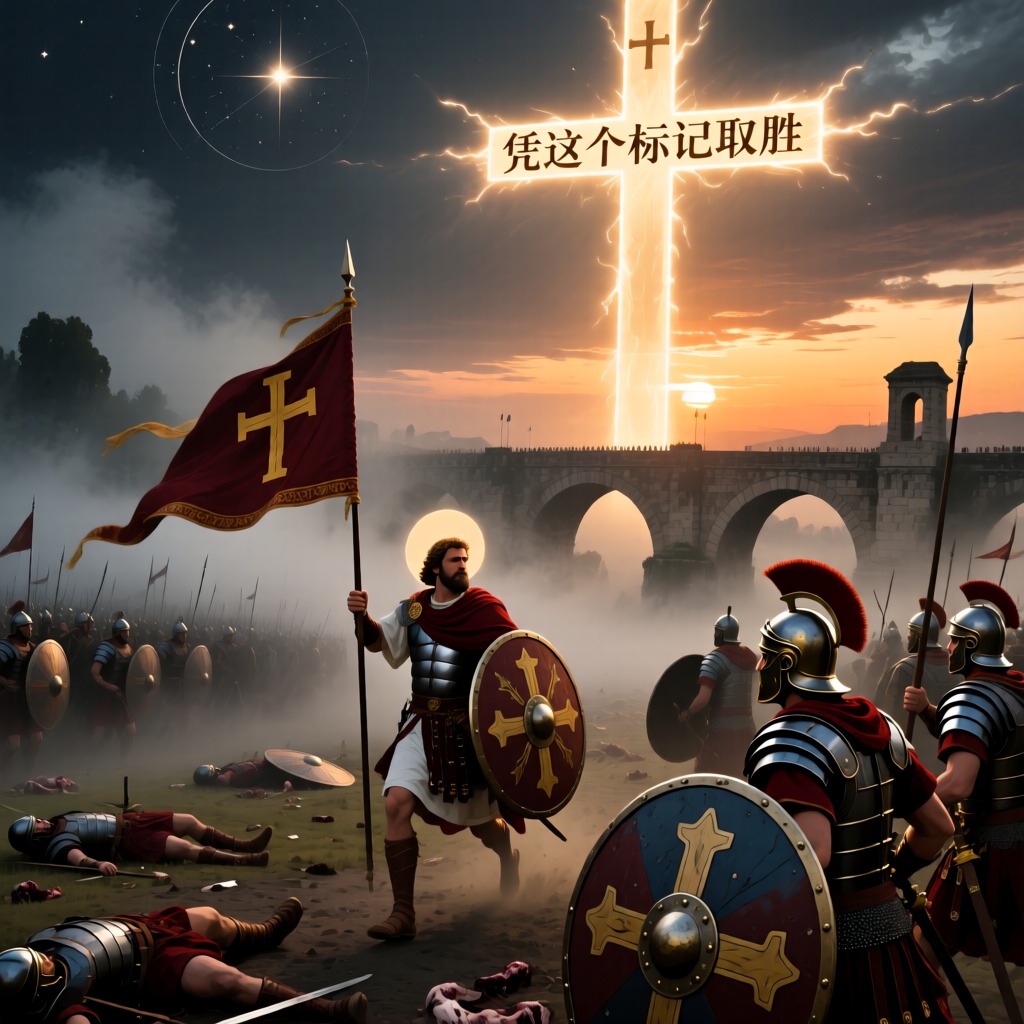

In the early 4th century, the Roman Empire was undergoing a crisis of faith. Christianity, as a rising religion, began to threaten the status of polytheism. At that time, Emperor Constantine faced immense pressure and needed to find a way to solidify Christianity's position. It is recorded that in October 312, on the eve of the Battle of Milvian Bridge, Constantine saw a large cross in the sky with the words 'In this sign, you will conquer.' This event boosted his confidence, leading to his victory over his opponent Maxentius. However, the accounts of this celestial phenomenon have sparked many questions among scholars in later generations.
Did Constantine truly experience such a phenomenon, or was it merely a psychological suggestion? Scholars believe that people of that era were highly superstitious, and the Christian church employed various means to garner support. Constantine's victory undoubtedly strengthened the position of Christianity, ultimately turning him into a staunch Christian. He not only moved the capital of the Roman Empire to Constantinople but also officially established Christianity as the state religion.
In 313 AD, Constantine issued the Edict of Milan, declaring freedom of religious belief. It wasn't until his death that Christianity was formally recognized as the state religion of the Roman Empire. Despite the controversy surrounding Constantine's vision of the cross, it is undeniable that this victory significantly altered the fate of Christianity.