
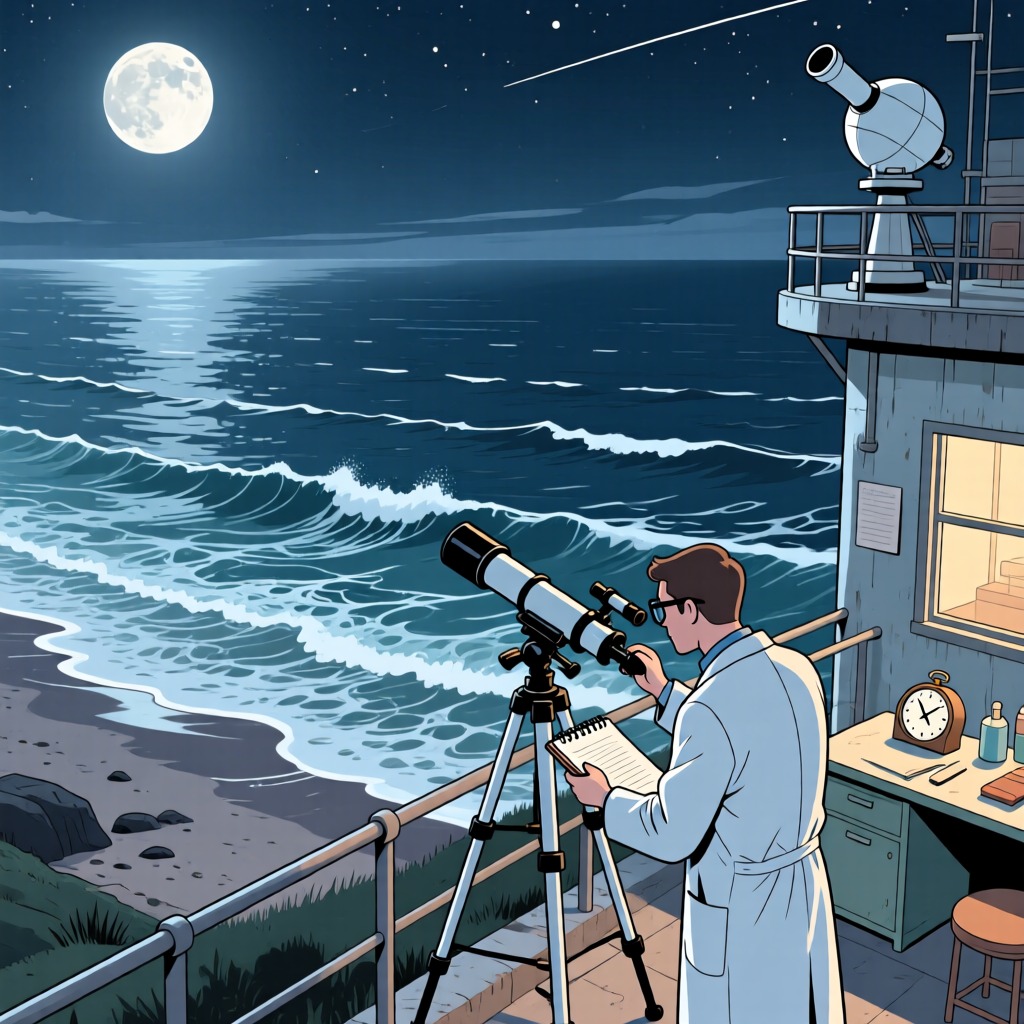

Over the past two thousand years, each century has seen the length of a day increase by 0.001 seconds. While this may seem insignificant, the cumulative effect over time is quite remarkable. This phenomenon is primarily due to the tidal forces exerted by the Moon on Earth, which gradually slow down the planet's rotation. The Moon's gravitational pull creates tides on Earth's surface, causing the sea levels to rise and fall periodically. As Earth continues to rotate from west to east, we perceive these tidal waves moving from east to west. However, these tidal waves exert a drag on Earth's rotation, thereby reducing its speed. Consequently, each day on Earth is actually longer now than it was in the past.
This process is expected to continue into the future, with Earth’s day potentially reaching the length of a month in about 5 to 10 billion years. By then, human lifestyles may undergo significant changes, possibly making it difficult to adapt to such a transformation. Nevertheless, this scenario is still far off, and there is no need for immediate concern.